Healthcare & Medical

Specialty Clinic Moving in Boston and MetroWest

Consult rooms, exam suites, waiting areas, and offices moved by our crew; procedure tables, lights, lasers, scopes, and sterilizers stay with their vendors.

(774) 421-9389
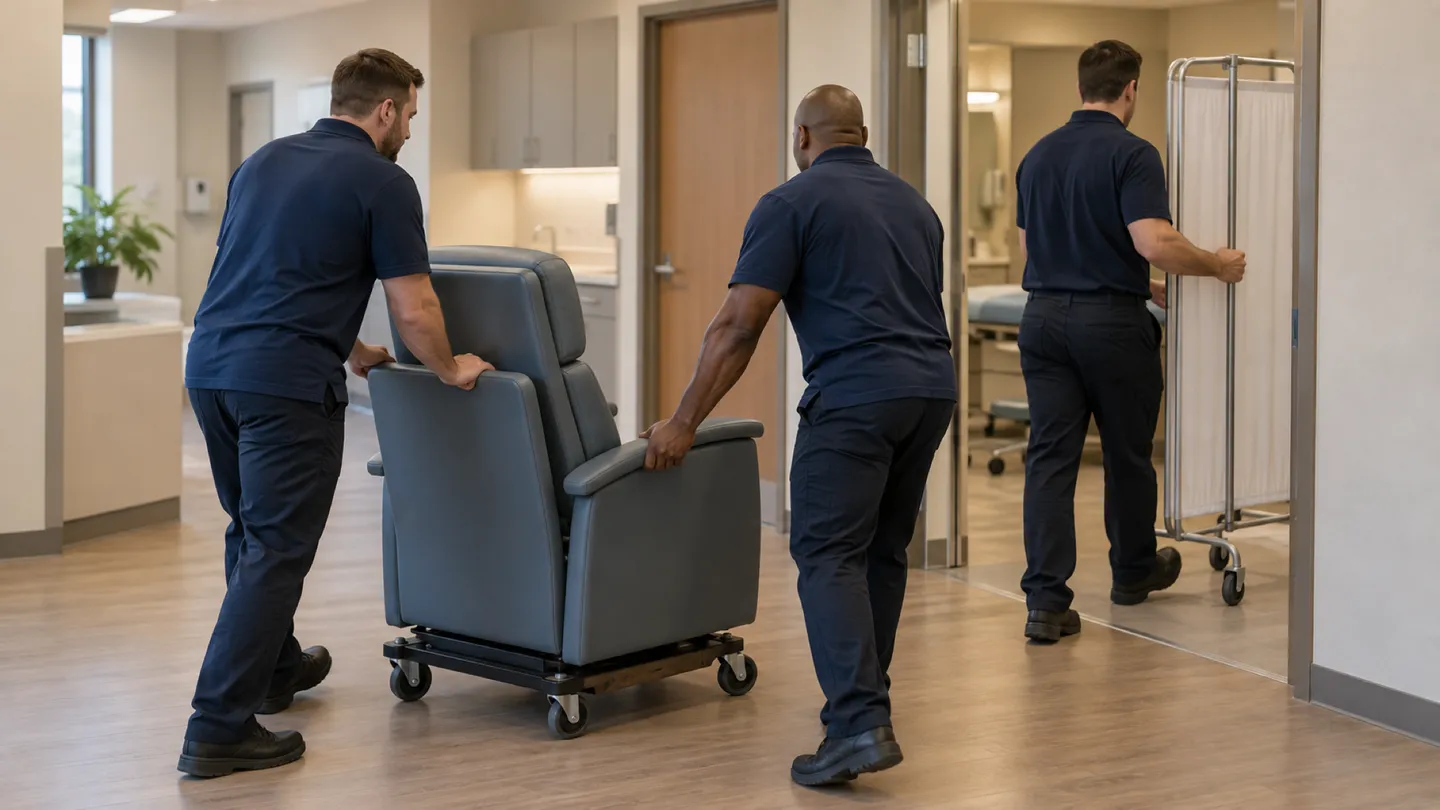
Specialty Clinic moving in Boston and MetroWest: moving crew at work
  • Licensed & Insured Fully Covered
  • Owner-Operated By Tyler Trefrey
  • 10 States Northeast Served

Start your free specialty clinic move quote

verified For estimate purposes only credit_card_off No credit card required

Planning a Specialty Clinic Move

Dermatology, gastroenterology, cardiology, ENT, allergy, and orthopedic practices look like any medical office from the waiting room. The difference is at the back, in the procedure rooms. A dermatology suite may have lasers and a power procedure chair; a GI practice has scopes and the equipment that reprocesses them; an ENT office has a treatment chair and microscope; an allergy clinic has refrigerated extracts; most have a sterilizer and ceiling-mounted procedure lights. Each of those belongs to a vendor or the practice's biomedical contact, and none of it is ours to take down.

So the move splits cleanly. Vendors release, move, and reinstall procedure equipment on their own schedule, and the practice's clinical staff move extracts, medications, and scopes under their own procedures. Our crew moves consult and exam rooms, the waiting area and front desk, the offices, the supply rooms, and any freestanding procedure-room furniture the vendor releases. Consult rooms and exam rooms usually reopen first, and procedure days start again once each vendor has finished. The healthcare moving page explains how that split works across clinics.

Who usually signs off
Practice administrator or clinic operations director, with the clinical lead approving room release and the vendor schedule
Timing that works
Built from the procedure schedule and each vendor's dates, often closing Friday with the crew in on Saturday by request, with procedure rooms reopening after vendors finish.

What typically moves

  • Consult room desks, chairs, and patient-education displays Set early, since consults can restart before any procedure room is back.
  • Exam room tables, stools, and supply cabinets Emptied, padded, and tagged to room numbers on the new plan.
  • Procedure-room carts and freestanding cabinets released by vendors Moved after the vendor or clinical lead clears them, with contents packed by staff.
  • Clean and soiled supply room shelving Kept apart and tagged by room, so clean supplies never share a cart with soiled-room fixtures.
  • Waiting area seating, check-in, and check-out desks Placed ahead of clinical rooms so patients can be seen on reopening.
  • Physician and administrative offices Labeled by name and brought in after patient rooms are finished.

Access and scheduling

List every vendor first: lasers, scopes and reprocessing, sterilizers, procedure chairs and lights, imaging. Ask each one when they can release equipment at the old suite and install at the new, then build the move around those dates. Many practices close on a Friday, shift consult, exam, and office areas across Saturday and Sunday by request, and see consult patients on Monday while procedure rooms follow as vendors finish.

Specialists here tend to lease suites in medical towers near Longwood and the downtown hospitals, in Brookline and Newton, and in outpatient buildings on suburban hospital campuses in Framingham, Norwood, and Milford. Those towers schedule their freight cars and docks weeks out, and many want the mover's certificate of insurance on file before they confirm; we send it on request.

Protection and handling

Specialty suites share corridors with other practices, so the route gets floor runners and wall and door-frame pads, and carts are kept out of other tenants' way. Exam tables travel wrapped, supply cabinets travel empty, and glass-front cabinets have their doors removed and wrapped. Wall-mounted otoscope sets, dispensers, and whiteboards stay on the wall unless your contractor takes them down.

Nothing clinical goes on our truck without being released. Scopes, extracts, medications, sharps, and anything in a sterile package stay with clinical staff, and the practice's waste hauler removes medical waste first. Records with patient information stay with staff. Front desk and exam room screens are unhooked, padded, and set up where the room plan shows; the health record system, imaging connections, and phones are handled by your IT contact and the relevant vendors.

Who does what

Some of this job belongs to other trades. The written plan names each one.

Lasers, procedure chairs, and ceiling-mounted procedure lights
The equipment vendors or your contractor remove, move, reinstall, and test them.
Scopes, scope reprocessors, and sterilizers
The practice's clinical staff and equipment vendors handle them, including any plumbing or electrical connections.
Allergy extracts, medications, and refrigerated supplies
Clinical staff move them under the practice's own procedures.
Ultrasound and other imaging equipment
The imaging vendor or biomedical contact releases, moves, and checks them.

Not part of our work

  • Moving procedure equipment, scopes, sterilizers, or imaging.
  • Handling medications, extracts, sharps, or medical waste.

Around Boston and MetroWest

Boston's specialty practices cluster in medical office buildings around the Longwood Medical Area and the downtown hospitals, with more in Brookline, Newton, and Wellesley. Out along the Pike and I-495, many specialists practice in outpatient buildings on or next to community hospital campuses in Framingham, Norwood, and Milford.

The crew that shows up

Eastside Movers crew in the snow outside Massachusetts colonials in winter

Specialty Clinic Moving FAQs

Another question? Call (774) 421-9389.

Can consult visits resume before our procedure rooms are reinstalled?

Usually, yes. We set consult rooms, exam rooms, and the front desk first, so consults and follow-ups can run on Monday while the procedure side is still with the vendors. Tell your schedulers which days procedures restart once the vendors confirm their dates.

How do we keep clean and soiled supply areas separate when we move?

We tag clean and soiled supply rooms separately and never share a cart or truck section between them. Clinical staff pack clean supplies and sterile packages themselves, and soiled-room fixtures move empty after cleaning. Medical waste goes out with your waste hauler before the move.

Who moves our lasers and scope reprocessing equipment?

The equipment vendors. Lasers, scope reprocessors, sterilizers, and procedure lights each go out of service under a technician, who also relocates and checks them in the new rooms, and some need plumbing or electrical work. We keep procedure rooms clear for vendors and move everything else around their schedule.

How many vendors should a specialty clinic line up before its move?

One for each piece of procedure or imaging equipment, which is often more than practices expect. Make a list room by room, including lasers, scopes, sterilizers, chairs, lights, and imaging, and get each vendor's release and install dates in writing. That list sets the moving date and the order rooms reopen.

Plan your business move

Tell us both addresses, the building rules you know about, and the dates you cannot move. We will send back a written plan and estimate.

Call (774) 421-9389

Mon–Sat 8:00 AM – 5:00 PM

Call Now call 774-421-9389