Healthcare & Medical

Medical Lab Moving in Boston and MetroWest

Freestanding benches, casework, emptied refrigerators, draw chairs, and offices, moved around the vendors who relocate and verify your analyzers.

(774) 421-9389
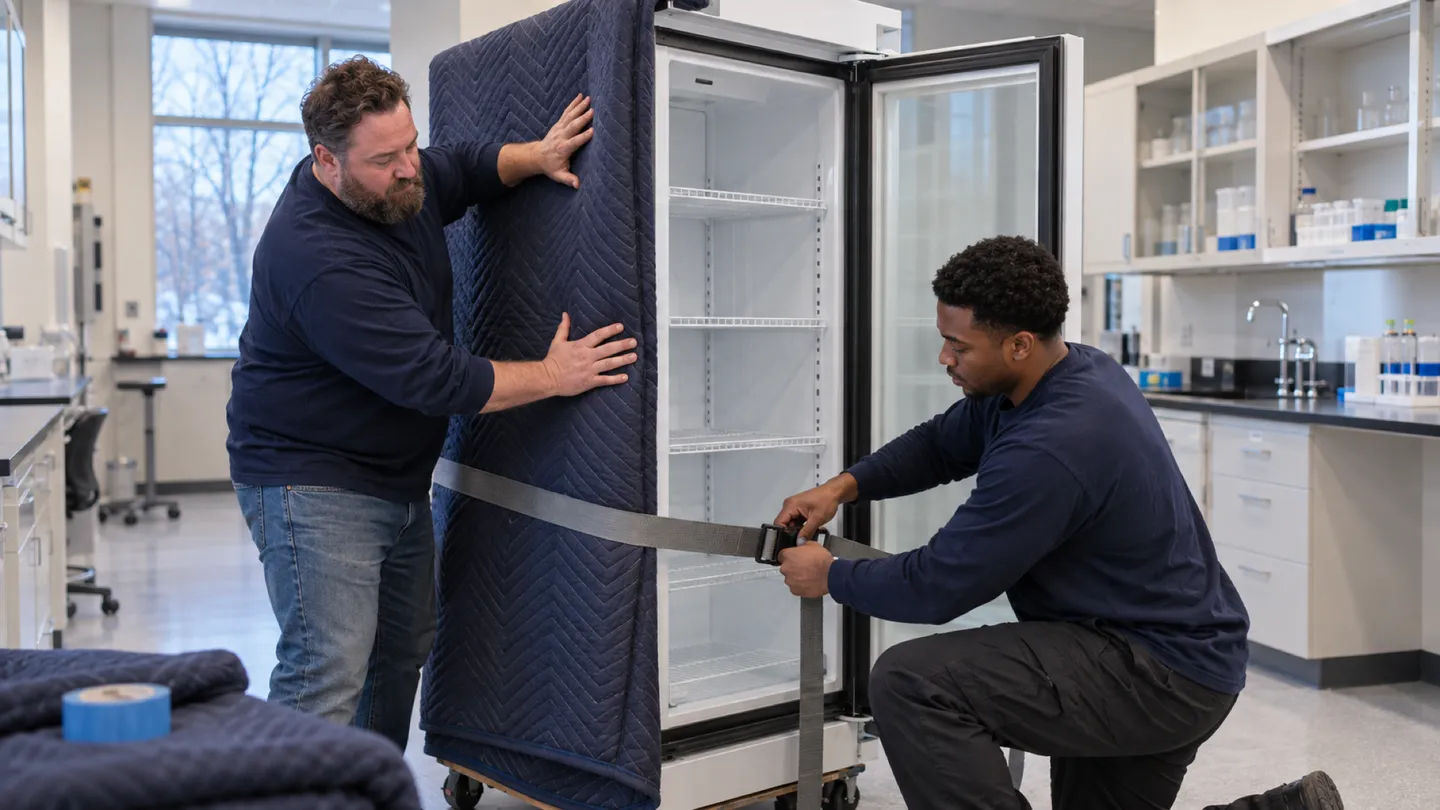
Medical Lab moving in Boston and MetroWest: moving crew at work
  • Licensed & Insured Fully Covered
  • Owner-Operated By Tyler Trefrey
  • 10 States Northeast Served

Start your free medical lab move quote

verified For estimate purposes only credit_card_off No credit card required

Planning a Medical Lab Move

A clinical lab cannot report results from equipment that has not been checked after a move. Analyzers are usually relocated by the manufacturer's field service team, and the lab then runs its own verification before patient testing resumes at the new site. That schedule belongs to the lab director and the vendors, and it sets the date for everything else.

Our crew handles the furniture and fixtures around it. Freestanding lab benches and mobile casework, supply shelving, emptied refrigerators the lab has released, phlebotomy draw chairs in a patient service center, the accessioning area, and the offices and break room. Specimens, reagents, and controls are moved by the lab's own staff or courier, and biohazard waste goes out with the lab's medical waste hauler before we arrive. Benches with plumbing, gas, or data behind them are released by the trade that connected them. The result is a new space where the furniture is in place and the vendors can install instruments without working around boxes. Our healthcare moving page explains the wider clinical and non-clinical split.

Who usually signs off
Laboratory operations or facilities manager, with the lab director approving the inventory boundary and instrument vendor schedule
Timing that works
Set by the analyzer vendors and the lab director's verification plan, with our part often on a weekend by request once specimens and reagents are out.

What typically moves

  • Freestanding lab benches and mobile casework Released by the lab, emptied, and tagged to their new positions on the floor plan.
  • Emptied refrigerators and freezers released by the lab Moved upright once staff have emptied them; the lab restarts them and watches them before loading.
  • Phlebotomy draw chairs and patient service center seating Moved and set in the draw rooms and waiting area, so patient draws can resume first.
  • Accessioning and specimen-processing workstations Desks and carts moved; centrifuges and processing equipment stay with the lab staff or vendor.
  • Supply shelving and non-hazardous consumables Boxed shelf by shelf by lab staff and set in the new supply room.
  • Lab director and administrative offices Tagged by person and moved with the rest of the office furniture.

Access and scheduling

Start with the analyzer vendors. Ask each one when they can take their instruments out of service, how long transport and reinstallation take, and when the lab can start verification. We fit our crew between those dates, often on a weekend by request, after specimens and reagents are out and before the vendors install at the new site.

Labs around Greater Boston are in hospital buildings, medical office buildings near Longwood, and flex buildings off 128 and out toward Marlborough. Medical buildings book freight elevators and docks and hold them once our insurance paperwork is on file; we send it on request. Flex buildings usually have a loading dock, but the lab may share it with other tenants, so the dock time is set with property management.

Protection and handling

Lab casework and bench tops are heavy, and epoxy and resin tops crack if they flex. Removable tops are stood upright in padded carts, and mobile casework moves on its own casters over protected floors. Refrigerators and freezers travel upright, and the lab decides when to plug them in and when to load them after watching the temperature settle.

Specimen racks, reagent kits, controls, and hazardous materials never enter our cartons or the truck. Lab staff clear every surface and drawer before we start, and the lab director signs off on each area. Workstations and screens at accessioning and in the offices are unplugged, padded, and plugged in again where the floor plan puts them, while the LIS and the instrument interfaces belong to your IT team and the vendors.

Who does what

Some of this job belongs to other trades. The written plan names each one.

Analyzers, centrifuges, and calibrated instruments
The manufacturers' field service teams relocate and reinstall them, and the lab runs its own verification.
Specimens, reagents, controls, and hazardous materials
Lab staff or the lab's courier move them under the lab's procedures.
Benches with plumbing, gas, or data connections
The licensed plumber, electrician, or cabling contractor who installed them disconnects and reconnects them.
Biohazard and medical waste
The lab's licensed medical waste hauler removes it before the move.

Not part of our work

  • Moving specimens, reagents, controls, or anything hazardous.
  • Relocating, calibrating, or verifying analyzers or other instruments.

Around Boston and MetroWest

Clinical labs around Boston sit inside hospitals in the Longwood Medical Area and downtown, in medical office buildings in Brookline and Newton, and in flex and office buildings along Route 128 in Needham, Dedham, and Canton and out to the Marlborough and Hopkinton parks. Patient service centers for blood draws are spread across town centers and plazas throughout MetroWest.

The crew that shows up

Two Eastside Movers crew members outside a client's red front door

Medical Lab Moving FAQs

Another question? Call (774) 421-9389.

When can patient testing resume at the new lab after the move?

That is the lab director's decision, based on the vendors' reinstallation and the lab's own verification of each instrument. Our part is to have benches, casework, and furniture in place before the vendors arrive, so reinstallation and verification can start as soon as possible. Ask each vendor how long their part takes before setting the move date.

Can your crew move our lab refrigerators and freezers?

Yes, once the lab has emptied them and released them to us. They travel upright, padded, and strapped. The lab then decides when to plug them in and when it is safe to reload them, usually after watching temperatures settle. Specimens and reagents are moved by lab staff or the lab's courier, not by us.

Which should move first, the patient draw area or the testing lab?

Many labs want the patient service center first, so draws can continue at the new address while analyzers are being reinstalled and verified. Specimens can go to another lab in the network in the meantime. Your lab director picks the sequence, and the truck is packed to match.

Who releases a lab bench that has a sink or gas outlet built in?

A licensed plumber for water and drains, and the right licensed trade for any gas or power hookup. Once they release a bench, we move it and set it in position, and the trade reconnects it at the new lab. Freestanding benches without connections we can move as soon as the lab has cleared them.

Plan your business move

Tell us both addresses, the building rules you know about, and the dates you cannot move. We will send back a written plan and estimate.

Call (774) 421-9389

Mon–Sat 8:00 AM – 5:00 PM

Call Now call 774-421-9389