Healthcare & Medical

Veterinary Clinic Moving in Boston and MetroWest

Cage banks, exam tables, the lobby, and prescription-diet shelving, moved between boarding peaks. Animals, drugs, and vaccines stay with your team.

(774) 421-9389
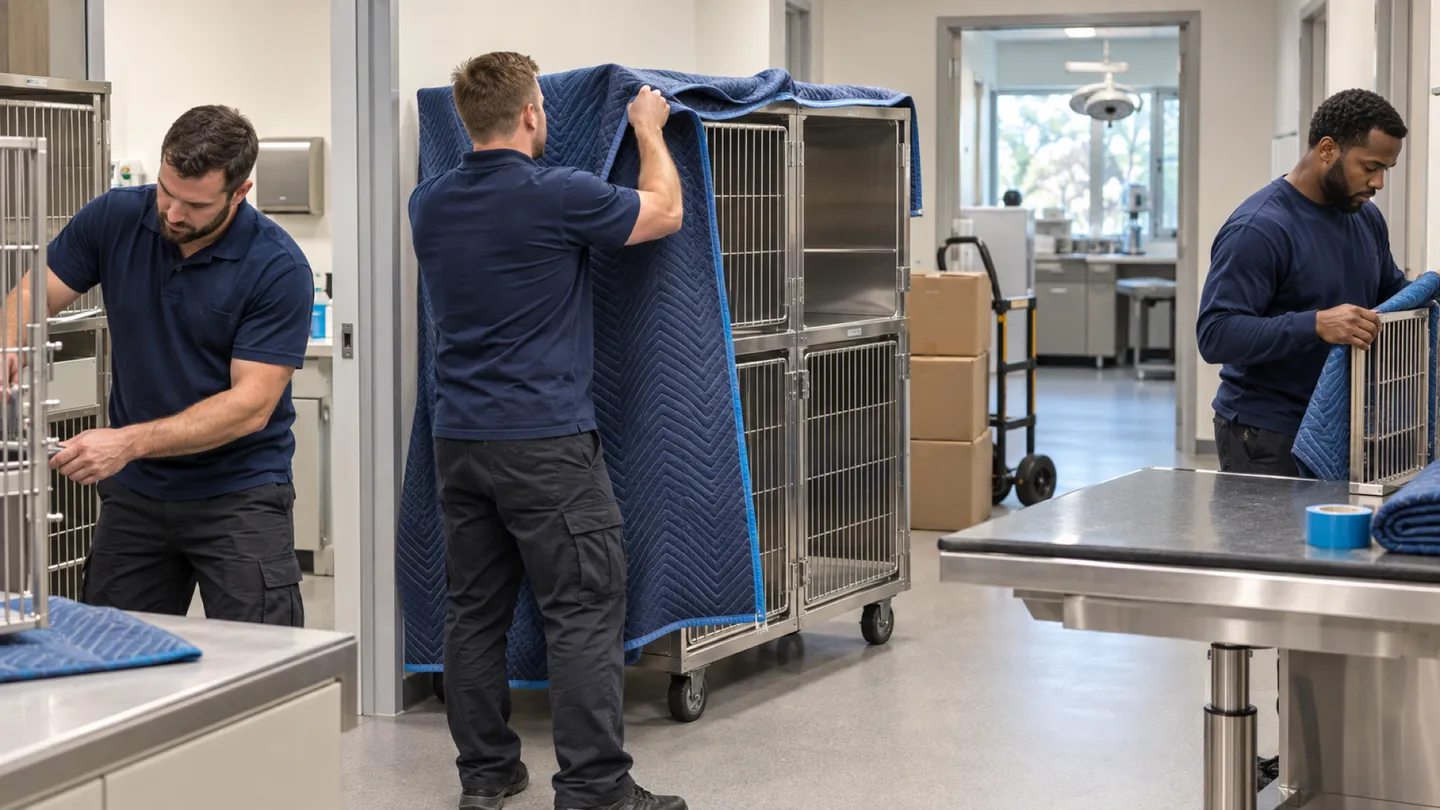
Veterinary Clinic moving in Boston and MetroWest: moving crew at work
  • Licensed & Insured Fully Covered
  • Owner-Operated By Tyler Trefrey
  • 10 States Northeast Served

Start your free veterinary clinic move quote

verified For estimate purposes only credit_card_off No credit card required

Planning a Veterinary Clinic Move

The boarding calendar often picks the date for a veterinary move. Clinics that board are full over Thanksgiving, the December holidays, February and April school vacations, and much of the summer, and every boarded animal has to go home or somewhere else before the kennel can be emptied. The quiet weeks in between are when most practices move.

Then comes the split. Animals never ride on our truck; staff and owners move patients and boarders. Controlled drugs stay with the veterinarian, who updates the drug registration to the new address before anything moves, and the contents of the vaccine and medication refrigerators follow the clinic's own plan. Anesthesia machines, surgical lights, imaging, and the blood chemistry and hematology analyzers belong to their service companies, and grooming tubs and plumbed kennel runs need a plumber or contractor. Our crew moves the modular cage banks and freestanding kennels, exam tables, the treatment area's carts and cabinets, the lobby and retail shelving, the offices, and the emptied refrigerators once staff release them. Our healthcare moving overview shows where the clinical vendors' work ends and ours begins.

Who usually signs off
Practice owner or hospital manager, with the DVM approving the animal, medication, and clinical-equipment plan
Timing that works
A weekend clear of holiday and summer boarding peaks, on request, after boarded patients have gone home or to another facility and the DVM's new-address registrations are ready.

What typically moves

  • Modular stainless cage banks and freestanding kennels Unbolted from each other where they are stacked, cleaned by staff, and tagged to their positions in the new ward.
  • Exam tables and exam room cabinets Freestanding tables moved padded; wall-mounted or powered lift tables wait for the contractor or vendor.
  • Treatment area carts and freestanding cabinets Emptied by staff and moved after the treatment area is cleared of drugs and supplies.
  • Lobby seating, reception counter, and pet-safe waiting dividers Placed first so clients can check in when the clinic reopens.
  • Prescription diet and retail shelving Stock boxed by staff; gondolas taken down and set up to the new layout.
  • Emptied medication and vaccine refrigerators Moved upright after staff empty them; the clinic restarts and checks them before restocking.

Access and scheduling

Pick the weekend around boarding first, then get the vendors' dates for anesthesia, radiography, and lab equipment, and the veterinarian's timeline for controlled-drug registration at the new address. Most practices close after Friday appointments, bring our crew in on Saturday by request, and see appointments again on Monday with surgery resuming once vendors are finished.

Veterinary clinics around Greater Boston are often freestanding buildings or plaza suites along Route 9, Route 1, Route 16, and the I-495 corridor, with a rear door and a lot. That makes loading cage banks easy. Clinics in converted houses or older buildings in Newton, Brookline, or Somerville can have narrow halls and doors, so we measure cage banks against every doorway before the date. Where the new ward is not finished, the banks can wait in a cleared room until the contractor is done.

Protection and handling

Cage banks are stainless steel, heavy, and dent-prone at the corners, and doors and latches bend if carried by them. Stacked banks are unbolted and separated before moving, doors are secured, corners are padded, and banks travel upright on dollies. The ward floor at the new clinic gets runners, since epoxy and sealed floors scratch, and each bank is set to the positions on your ward plan so drains and outlets line up.

Staff clean and disinfect cages and kennels before we move them, under the clinic's own protocols, and drugs, sharps, and medical waste are cleared first. Drugs, samples, and anything from the sharps bins are kept off our load entirely. The practice-management software and the lobby screens are your IT contact's; we unhook, pad, and reconnect the computers at the new front desk.

Who does what

Some of this job belongs to other trades. The written plan names each one.

Controlled drugs, medications, and vaccines
The veterinarian and staff move them under the clinic's own procedures, after handling the registration for the new address.
Anesthesia machines, surgical lights, radiography, and lab analyzers
The equipment vendors take them out of service, move them, and reinstall and test them.
Grooming tubs, plumbed kennel runs, and floor-drain fixtures
A licensed plumber or contractor disconnects and reinstalls them.
Patients and boarding animals
Staff and owners move animals; they never ride on the moving truck.

Not part of our work

  • Transporting animals of any kind.
  • Handling controlled drugs, medications, vaccines, or medical waste.

Around Boston and MetroWest

Veterinary practices around Greater Boston range from freestanding animal hospitals off Route 9 in Framingham and on Route 1 through Dedham and Norwood to small clinics in converted houses in Newton, Brookline, and Arlington, and plaza clinics in the I-495 towns. Many suburban clinics board and groom as well, which makes the boarding calendar the first thing to check.

The crew that shows up

Two Eastside Movers crew members outside a client's red front door

Veterinary Clinic Moving FAQs

Another question? Call (774) 421-9389.

When is the easiest time of year to move a veterinary clinic that boards?

Between boarding peaks. Thanksgiving, the December holidays, the February and April school vacations, and much of the summer tend to fill kennels. A weekend in early spring, early fall, or January often works better. Check your own boarding calendar and pick a date with the fewest reservations.

Can your crew move our cage banks without damaging the doors?

Yes. Stacked banks are unbolted and separated, doors and latches are secured so they do not swing, corners are padded, and banks travel upright on dollies. We measure every doorway at the new clinic before the date, since some cage banks will not fit through narrow halls without separating.

Who handles our controlled drugs when the clinic moves?

The veterinarian and staff, under the clinic's own procedures. Controlled drugs are tied to a registration at a specific address, so the veterinarian sorts out that registration for the new building before they go anywhere. Our crew never handles or transports any drugs.

Do you move boarding animals or patients between clinics?

No. Animals never ride on our truck. Staff and owners move patients and boarders, or boarders go home before the move. Once animals are out and the ward is cleaned, we move the cage banks and kennels and set them in the new ward.

Plan your business move

Tell us both addresses, the building rules you know about, and the dates you cannot move. We will send back a written plan and estimate.

Call (774) 421-9389

Mon–Sat 8:00 AM – 5:00 PM

Call Now call 774-421-9389