Healthcare & Medical

Hospital Administrative Office Moving in Greater Boston

Business, billing, finance, and department offices of hospitals and health systems, moved under the facility's rules for docks, elevators, badges, and hours.

(774) 421-9389
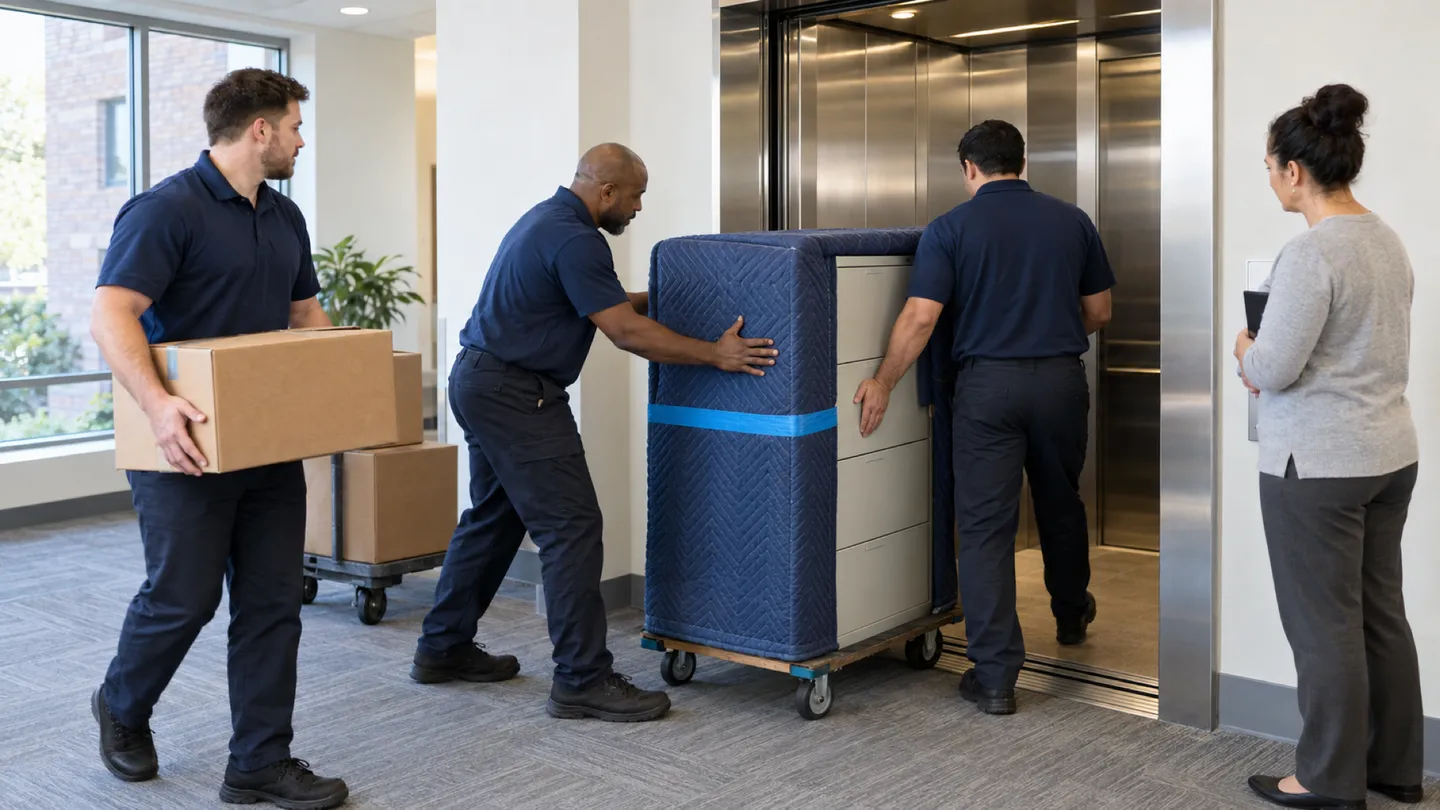
Hospital Administrative Office moving in Boston and MetroWest: moving crew at work
  • Licensed & Insured Fully Covered
  • Owner-Operated By Tyler Trefrey
  • 10 States Northeast Served

Start your free hospital administrative office move quote

verified For estimate purposes only credit_card_off No credit card required

Planning a Hospital Administrative Office Move

Hospital office space shifts all the time. Revenue cycle teams consolidate, a department's administrative staff move out of the main building to make room for clinical space, or a whole finance group heads to leased offices off campus. None of that touches patients, but all of it happens inside or next to buildings where patients come first, and the facility's rules decide almost everything about the day.

This page covers the non-clinical side: business and billing offices, finance and HR, department administration, research administration, and executive suites. Patient care areas, clinical equipment, and anything in a lab stay with the hospital's own teams and vendors. We work from the facilities department's rules: which dock, which service elevator and when, where the truck can stand, who escorts the crew, and when noise is allowed. On campus, patient transport, food service, and supply deliveries get the elevators first, and we plan to yield. Paper records with patient information stay under the department's control. The broader split between clinical and non-clinical work is on our healthcare moving page.

Who usually signs off
Health system facilities or administrative operations lead, with department managers approving the office inventory and destination assignments
Timing that works
Evenings or weekends on request, in the dock and elevator windows the facility assigns, often away from morning deliveries and daytime patient transport.

What typically moves

  • Billing and revenue cycle workstations Tagged by seat from the department's plan, with each person's screens, headset, and chair moved together.
  • Finance, HR, and administrative offices Moved by department, often on separate nights so each group has a short cutover.
  • Department administrators' and physician leaders' offices Desks, bookcases, and locking cabinets tagged by person; cabinets move locked.
  • Conference rooms and training rooms Tables, chairs, and presentation carts moved last, after working areas are set.
  • Research administration and grants offices Office files and furniture move; anything in a lab stays with the lab's own staff.
  • Mailroom and print center furniture Sorting tables and shelving set early, so interoffice mail keeps flowing.

Access and scheduling

Start with the facilities department. Ask which loading dock the crew uses, when the service elevator is available, whether an escort is required, how badges are issued, and what the site requires from vendors before the date. Evening and weekend windows, on request, are common, since the dock is busiest with morning deliveries and the elevators with daytime patient transport. The facility will want a certificate of insurance naming it before the date, which we send on request.

In the Longwood Medical Area, streets and loading zones are crowded, so truck staging is planned with facilities in advance. Off-campus administrative buildings in Boston, Quincy, Needham, Newton, and the Route 128 parks usually have ordinary office loading, but the hospital's rules for hours and badges may still apply.

Protection and handling

Hospital corridors carry patients, carts, and visitors, so the crew keeps carts to the route facilities approves, stages in the space they assign, and never blocks a corridor or elevator lobby. Corners, jambs, and the inside of each service car are padded, and floors get runners where facilities wants them.

Paper with patient information stays with the department. Staff pack, seal, and label it, or carry it, and we never open or sort it. Workstations are unhooked, wrapped, and reconnected at their new seats; the hospital's IT department handles network connections, phones, and applications. Anything tagged as clinical equipment or hospital property that is not on the move list stays where it is until facilities says otherwise. At the end of each night, the crew leaves the old and new areas clear, with carts and packing materials off the corridors before the morning shift arrives.

Who does what

Some of this job belongs to other trades. The written plan names each one.

Clinical areas, medical equipment, and anything in a lab
The hospital's own clinical engineering team and its vendors handle them; our crew stays in the office areas.
Network, phones, and applications
The hospital's IT department brings them back up and checks each seat.
Records with patient information
Department staff pack and seal them under the hospital's own policies.

Not part of our work

  • Any work in patient care areas or with medical or lab equipment.
  • Opening, sorting, or packing records with patient information.

Around Boston and MetroWest

Boston's teaching hospitals are concentrated in the Longwood Medical Area and around downtown, and many of their business and administrative offices have moved to leased space nearby or out along Route 128 and in Quincy, Needham, and Newton. Community hospitals across MetroWest and the I-495 towns keep administrative offices on campus or in medical office buildings next door.

The crew that shows up

Two Eastside Movers crew members outside a client's red front door

Hospital Administrative Office Moving FAQs

Another question? Call (774) 421-9389.

What will the hospital's facilities department need from a mover before the date?

Usually a certificate of insurance naming the hospital, a list of crew members for badges or escorts, the truck details, and the planned dock and elevator times. Some sites have their own vendor-access steps. Ask facilities for their written requirements early, and we plan around them before the move date is set.

Can billing staff keep working while their department's offices move?

Often, if the department moves in stages. Many revenue cycle teams work partly remotely, so the office side can move over an evening or weekend while staff work from home. For teams that need to be in the office, we move one group at a time, so each group's cutover is short.

Can you move administrative offices inside a hospital building during the day?

Sometimes, but the facility decides. Daytime moves inside a clinical building have to yield to patient transport and deliveries on the elevators and in the corridors, which slows everything down. Most facilities prefer evenings or weekends for anything beyond a few offices, and we can work those windows on request.

Where does the line fall between office furniture and clinical equipment?

The hospital draws it. Facilities or the department manager gives us a list of what moves, and anything that is clinical equipment, hospital-tagged medical property, or in a lab stays off it. If the crew finds something unclear, like a cart or cabinet that might be clinical, we leave it for facilities to decide.

Plan your business move

Tell us both addresses, the building rules you know about, and the dates you cannot move. We will send back a written plan and estimate.

Call (774) 421-9389

Mon–Sat 8:00 AM – 5:00 PM

Call Now call 774-421-9389