Commercial Service

File and Records Moving in Boston and MetroWest

Decide which cabinets can travel loaded, measure the files that need cartons, and carry shelf order through to the receiving room.

(774) 421-9389
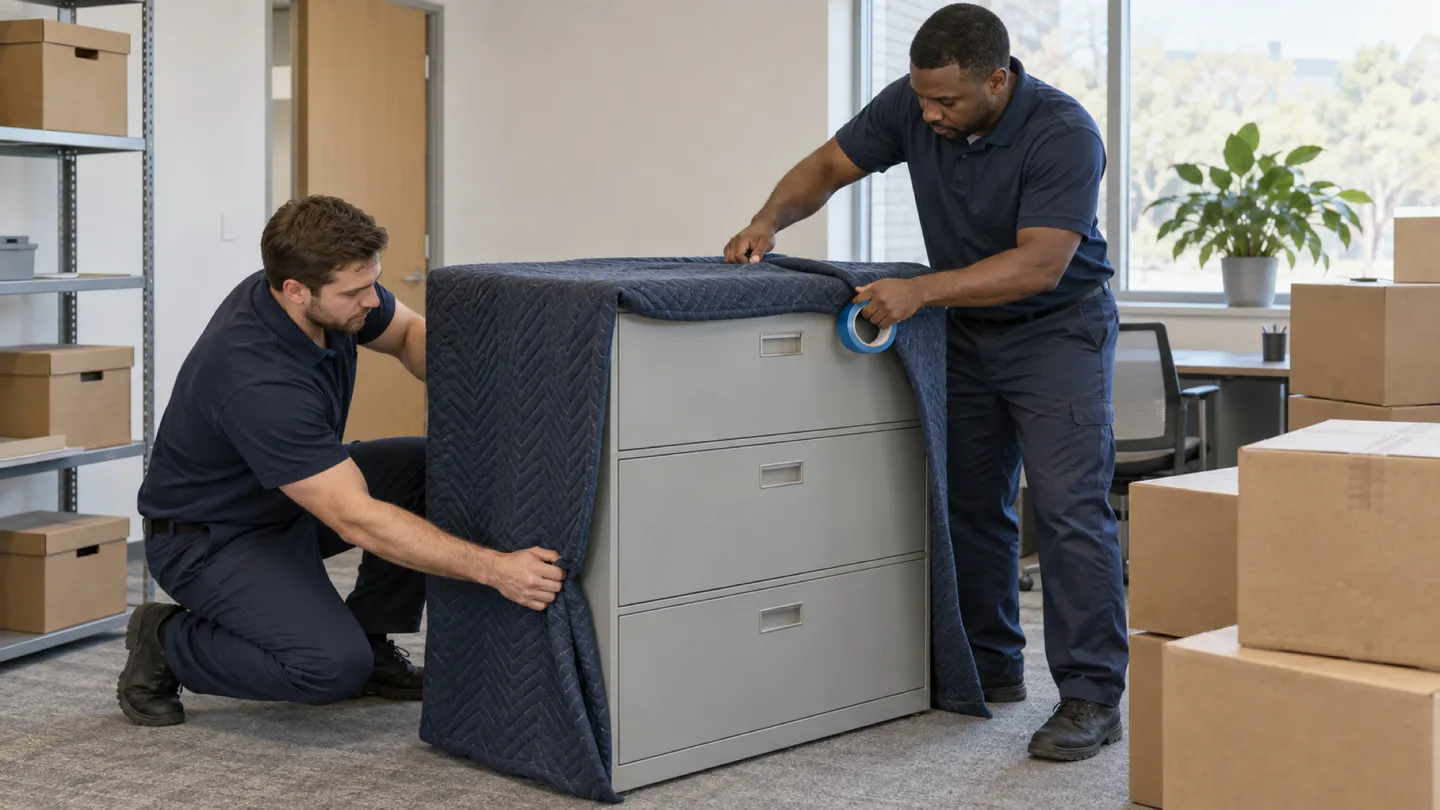
File & Records Moving moving in Boston and MetroWest: moving crew at work
  • Licensed & Insured Fully Covered
  • Owner-Operated By Tyler Trefrey
  • 10 States Northeast Served

Start your free commercial move quote

verified For estimate purposes only credit_card_off No credit card required

How We Plan File & Records Moving

Moving files comes down to one question per cabinet: does it travel full or empty? Many lateral file cabinets can move with their drawers full if the maker allows it, the drawers lock or are secured, and the route and elevator can take the weight. Others, especially older cabinets, tall verticals, and anything with weak drawer slides, must be emptied first, and their files boxed in drawer order. Each cabinet and the whole route get checked before that call is made.

For files that are boxed, planning runs on occupied linear feet of files rather than on the number of cabinets, since a half-empty cabinet and a full wall of open shelving are very different jobs. Your records lead marks where each run starts and ends and where it goes. Cartons are labeled with the run, the source cabinet and drawer, and their position in the sequence, so the new file room can be rebuilt in order. What is in the files, how long it is kept, and what is shredded remain your decisions and your shredding vendor's work.

Who usually signs off
Facilities manager or records lead approving the cabinet inventory, receiving shelf plan, and release of files for transport
Timing that works
Each file run moves after the records lead releases it; cabinets often move loaded on the main move day while boxed runs are packed a few days before. Evening or weekend work on request.

What typically moves

  • Lateral file cabinets Moved full once drawers, slides, weight, and route are checked.
  • Vertical file cabinets Tall and top-heavy; usually emptied and boxed in drawer order.
  • Hanging folders from emptied drawers Boxed in their existing order, labeled for cabinet and drawer.
  • Archive cartons on open shelving Original box numbers kept; new shelf positions added.
  • Plan drawers and oversize document cabinets Large sheets stay flat; never folded into standard cartons.
  • Freestanding file-room shelving Marked by bay and shelf, then set to the new layout.

Access and scheduling

Before booking, send a cabinet list and a sketch of the file room at both ends, and mark when each run can be released. Measure the filled length of each drawer and shelf, not just the count of cabinets, and show where each run begins in the new room.

The building often settles the full-or-empty question. We check the elevator's size and posted capacity, the corridors, ramps, and thresholds between the file room and the dock. Full cabinets are heavy, and some towers restrict how much weight rides in the freight elevator at once. A downtown building may also want the dock and elevator booked and the building will want our insurance certificate before the date; we send it when asked. Your records lead and the building agree where cartons and cabinets can stage.

Protection and handling

Every cabinet gets a destination mark before it leaves its row. A cabinet cleared to travel full has its drawers locked or secured and rides upright on a dolly, never tipped. If a drawer will not stay shut or the cabinet flexes, the files come out and are boxed in drawer order. Cabinet fronts and corners are padded, and keys stay with the person you name.

Boxed files carry their run, source cabinet, drawer, and position. Runs stay together on the truck and are set beside their shelves in order. On request, we refile folders into the new cabinets following the labels. Staff check the order against their own index before filing resumes, and any carton with a damaged label goes to one spot for them to sort.

Who does what

Some of this job belongs to other trades. The written plan names each one.

Which files move, which stay, and when
Your records lead decides and releases each run.
Retention and disposal
Your organization applies its retention schedule and sets aside what leaves by another route.
Confidential shredding
Your shredding vendor collects and destroys records under its own process.

Not part of our work

  • Reading files or deciding what is kept.
  • Destroying records or choosing what is shredded.

Around Boston and MetroWest

File rooms in Financial District and Back Bay towers can be several elevator trips from the dock, with building limits on freight weight. Offices along Route 128, in Framingham, and in the I-495 parks usually have shorter carries but often keep files spread across departments rather than in one room.

The crew that shows up

Eastside Movers crew in the snow outside Massachusetts colonials in winter

File & Records Moving FAQs

Another question? Call (774) 421-9389.

Can our lateral filing cabinets move with the drawers still full?

Often, but it depends. We check the cabinet's drawers and slides, its weight when full, and the whole route, including the elevator. Locking the drawers is not enough if the cabinet itself cannot take the strain. If it should be emptied, we box the files drawer by drawer so they go back in the same order.

Why measure occupied linear feet if we already know how many cabinets we have?

Because the number of cabinets says nothing about how much paper is in them. Measuring the filled length of each drawer and shelf tells us how many cartons a run needs if it is emptied, and whether the new room has space for it. Include cabinets scattered around departments, as well as the file room.

How should we label a file run that crosses several cabinets?

Give the whole run one code and number its cartons in reading order, with the source cabinet and drawer on each. On the new room's sketch, show where the run starts and how it continues. We place the cartons in that order, and your records lead checks it before filing resumes.

What happens to records we intend to shred during the move?

Set them aside before packing and arrange collection with your shredding vendor. They never enter our cartons or our truck. We plan the move from the files you release, and anything marked for shredding stays out of the destination sequence entirely.

Can employees keep a working drawer available while the rest of the file room moves?

Yes. Your records lead marks that drawer and when it can be released. We move everything around it, and the working files follow on the day they are released, straight to a spot already marked on the new shelf plan.

Plan your business move

Tell us both addresses, the building rules you know about, and the dates you cannot move. We will send back a written plan and estimate.

Call (774) 421-9389

Mon–Sat 8:00 AM – 5:00 PM

Call Now call 774-421-9389