Warehouse & Light Industrial

Film Production Studio Moving in Boston and MetroWest

Set pieces, lighting and grip cases, and prop shelves move against your production inventory, with the studio deciding what stays available for filming.

(774) 421-9389
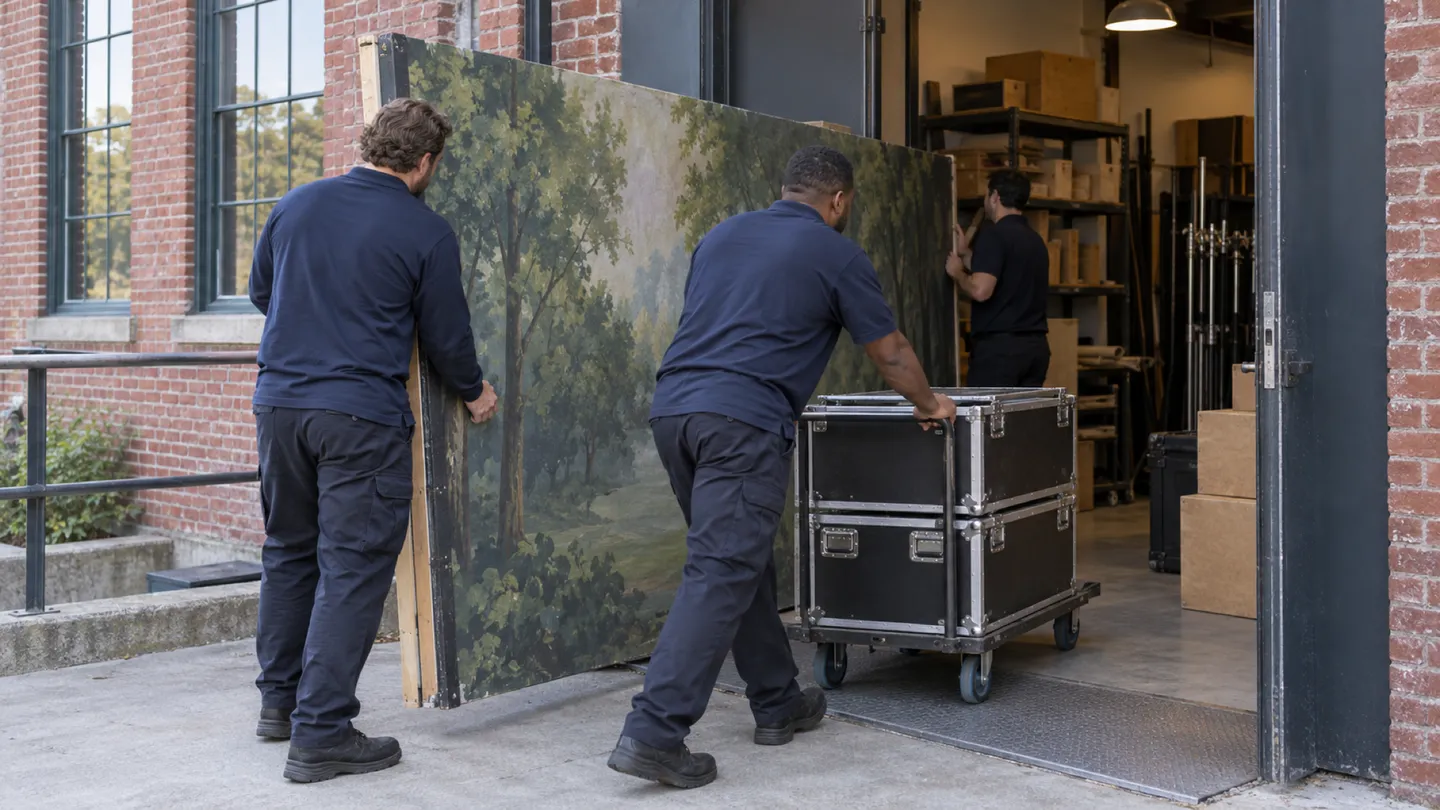
Film Production Studio moving in Boston and MetroWest: moving crew at work
  • Licensed & Insured Fully Covered
  • Owner-Operated By Tyler Trefrey
  • 10 States Northeast Served

Start your free film production studio move quote

verified For estimate purposes only credit_card_off No credit card required

Planning a Film Production Studio Move

A studio move is a strike that ends at a different address. The art department strikes the set, grip and electric pack their carts and cases, props and wardrobe close their bins and racks, and each department hands us its released inventory. What changes the plan is what is not released: a pickup shoot may still need part of a set, and camera and lens packages usually come from rental houses and go back to them rather than onto our truck.

We move the studio's own inventory: hard flats and wall sections, platforms and risers, scenic pieces, grip carts, road cases, C-stands, sandbags, prop shelving and bins, set dressing, wardrobe racks, and the production office. Each department labels its groups by destination stage, department, or scene, and we keep those groups together. Lighting grids, hanging points, and anything suspended from the building belong to your key grip, gaffer, or the electrician who installed them. A cyc wall built into the stage stays with its builder.

Who usually signs off
Studio operations manager or production manager, with the art department, prop master, and lighting lead signing off on their own inventories
Timing that works
Between a set strike and the next build, around any pickup shoot the production has scheduled; evening or weekend loading on request where the building allows.

What typically moves

  • Hard flats, wall sections, and scenic pieces Struck and marked by your art crew; faces padded, grouped by set.
  • Platforms, risers, and stair units Legs and hardware bagged with each section.
  • Grip carts, C-stands, and sandbags Sandbags ride low on the truck; stands bundled by cart.
  • Lighting and grip road cases Closed and checked by the department before release.
  • Prop shelving, bins, and set dressing Bins closed by the prop master; practical lamps wrapped separately.
  • Wardrobe racks and costume cases Released rails and cases go to the new wardrobe room.

Access and scheduling

Send the strike order and the new studio's stage plan. Each department releases separately, and we load in that order. Pickup-shoot material stays in a marked working zone until the production releases it. Nights and weekends work too, if the calendar and building allow.

Studios in this market are often in converted industrial buildings or flex space. A converted building may have a shared freight elevator and tight corners; a flex building near Route 128 or I-495 usually has a drive-in door. Tall flats need door, elevator, and ceiling heights checked before the date. Landlords often want our insurance certificate; pass along the wording they use. Tell us, too, where the truck can stand while flats are carried out, since long pieces need a straight path to the door.
Protection and handling

Scenery is light for its size but fragile where it counts: painted faces, corners, and joints. Flats travel on edge with pads between faces, loose trim stays taped to its parent piece, and nothing heavy is stacked against a finished edge. Platforms keep their legs and hardware with them.

Sandbags and heavy road cases ride low and forward on the truck, strapped so they cannot shift into scenery. Grip carts are strapped in place. Prop bins travel closed, and the prop master decides which items are fragile enough to be wrapped or carried by staff. At the new studio, each group goes to its assigned zone, and your department heads check their inventory before the next build. Anything that arrives without a label waits in one spot for them.

Who does what

Some of this job belongs to other trades. The written plan names each one.

Lighting grid, rigging points, and anything hung from the building
Your key grip, gaffer, or electrician takes them down, installs them, and inspects them.
Camera and lens packages and rental gear
Your camera department returns them to the rental house or moves them itself.
Set strike, cyc wall, and set rebuild
Your art department and carpenters strike and rebuild sets; the cyc builder handles built-in walls.

Not part of our work

  • Taking down or hanging lighting, rigging, or suspended scenery.
  • Moving rental camera packages or checking equipment inside cases.
  • Cataloging props or approving what a pickup shoot needs.

Around Boston and MetroWest

Production space around Boston is mostly converted industrial buildings and flex bays, from Somerville and the Route 128 towns of Canton and Needham to mill buildings in Worcester and the I-495 parks in Marlborough and Franklin. Most have a drive-in door; converted mills may rely on one freight elevator.

The crew that shows up

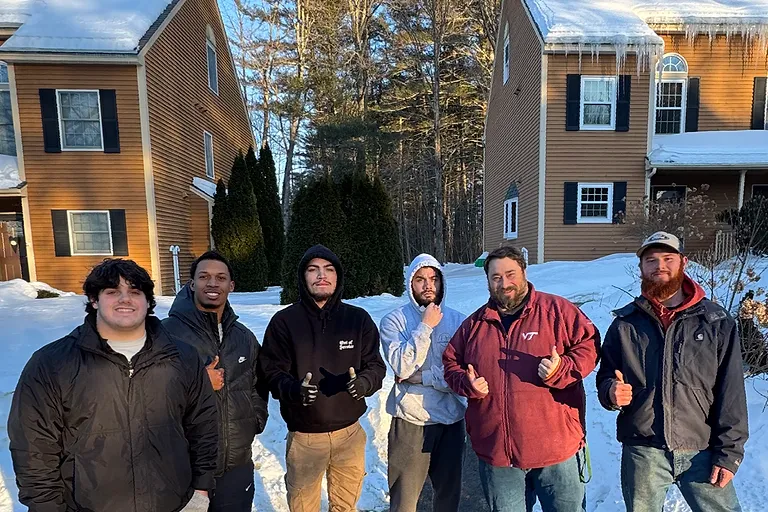
Eastside Movers crew in the snow outside Massachusetts colonials in winter

Film Production Studio Moving FAQs

Another question? Call (774) 421-9389.

How do we keep a pickup shoot's set and cases out of the studio load?

Each department marks what the pickup needs before strike and keeps it in a working zone. We load from the release lists and leave that zone alone. When the production wraps the pickup, the rest can go on a later load.

Can flats from different scenes travel together without losing their set order?

Yes, if the art department marks each flat with its set and position before it leaves the stage. We keep each set's flats together on the truck, with trim and hardware attached, and unload them at the build zone your crew names.

Who counts the props inside closed bins when the studio relocates?

Your prop master or the person they name. They close and label the bins, and they check the contents at the new studio. We carry the bins and place them by the shelf map without opening them, so the count your prop master made at the old studio still holds.

Does your crew move our camera and lens packages?

Usually not. Most camera packages come from rental houses and go back to them, and owned camera gear is normally packed and moved by the camera department. Lighting and grip road cases we do carry, once the department has closed and released them.

Plan your business move

Tell us both addresses, the building rules you know about, and the dates you cannot move. We will send back a written plan and estimate.

Call (774) 421-9389

Mon–Sat 8:00 AM – 5:00 PM

Call Now call 774-421-9389