Warehouse & Light Industrial

Moving a Business in a Worcester or MetroWest Mill Building

A shared old freight elevator, a long route to the truck, and neighbors still at work shape the move from a converted brick mill.

(774) 421-9389
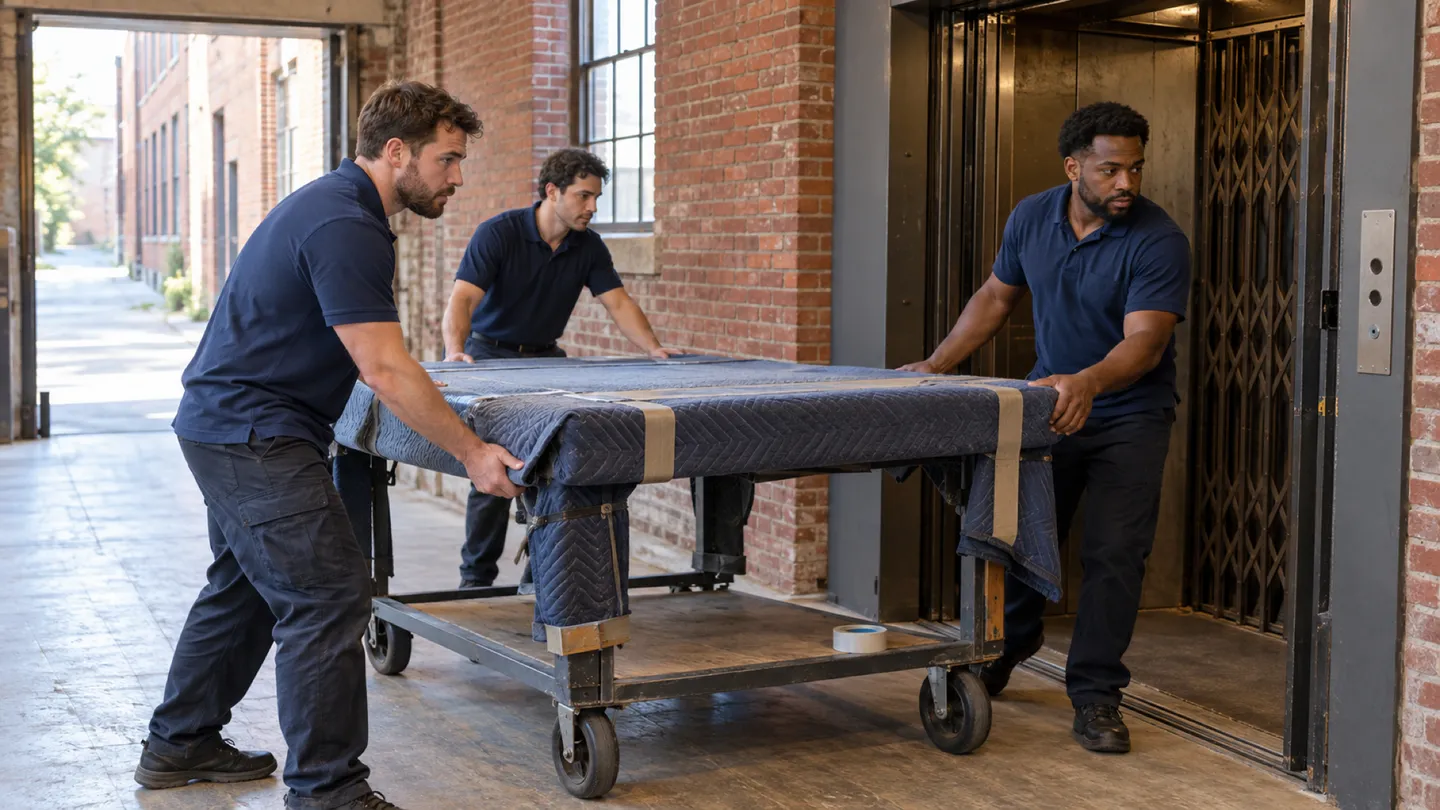
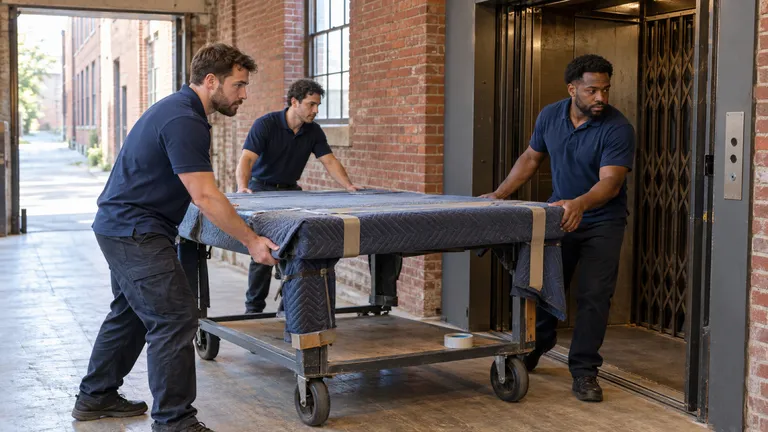
Mill Building moving in Boston and MetroWest: moving crew at work
  • Licensed & Insured Fully Covered
  • Owner-Operated By Tyler Trefrey
  • 10 States Northeast Served

Start your free mill building move quote

verified For estimate purposes only credit_card_off No credit card required

Planning a Mill Building Move

Worcester, Framingham, and the Blackstone Valley are full of brick mills that now hold a mix of tenants: artists' studios, small shops, design offices, woodworkers, and small manufacturers, all sharing one old freight elevator, one loading door, and long corridors. Moving a business out of one, or into one, is mostly a question of the building's route. The elevator may have a manual gate, a shallow cab, and a posted capacity on its inspection certificate. The corridor may run the length of a wing with a turn at every stair tower. The loading door may open onto an alley with room for one truck.

We start by measuring that route and reading the elevator's posted capacity, then plan loads to fit the cab. The crew moves studio worktables and flat files, display cases and plinths, freestanding benches, stock bins, and office desks, staged inside your suite so neighbors can still use the hall. Machines and anything wired or plumbed in go to your equipment mover and the right trade. The property manager books the elevator and alley.

Who usually signs off
Tenant business owner or operations manager, with the mill property manager approving elevator and alley access
Timing that works
When the mill's manager can give you the freight elevator and loading door, working around neighboring tenants' deliveries; evening or weekend work on request.

What typically moves

  • Studio worktables and flat-file cabinets Drawers emptied or secured; each checked against the cab and turns.
  • Plinths and display panels Corners padded; loaded in the order the new room is set up.
  • Display cases and garment rails Glass shelves come out and ride wrapped.
  • Freestanding benches and tool cabinets Emptied by your staff and checked against the route.
  • Stock bins and shipping tables Closed bins marked for their new shelf or work area.
  • Office desks and sample libraries Placed to the new layout; computers reconnected at each desk.

Access and scheduling

Ask the manager for the freight cab's door opening, depth, and posted capacity, and whether the elevator needs an operator or a key. Then walk the route from your suite to the loading door: thresholds, ramps, tight corners, and total distance. Anything that cannot make that route has to be taken apart or go another way, and that is decided before packing.

Mill buildings have neighbors with their own schedules: a shop with customers, a studio waiting on a kiln delivery, a manufacturer shipping daily. The manager books the elevator and alley and can suggest quieter hours, and our crew can come after hours or on a Saturday by arrangement where the building permits. Many mill managers want our insurance certificate before they confirm the booking, and we send it.
Protection and handling

Mills are hard on furniture: rough brick walls, uneven patched floors, steel posts in the middle of rooms, and elevator gates that catch corners. Cases and tables are padded before they reach the common corridor, corners get guards, and glass is wrapped apart from its frame. Carts are loaded lighter than usual so they handle well on uneven floors.

A long carry means everything must be easy to handle closed: stock bins with visible labels, loose samples and tools boxed, finished work wrapped or carried by your staff. Staged pieces stay inside your suite, not in the corridor, so exits and neighbors' doors stay clear. Old wood floors can have load limits posted, so heavy loads are split across more trips when the manager asks.

Who does what

Some of this job belongs to other trades. The written plan names each one.

Production machines and heavy shop equipment
Your equipment mover or rigging contractor plans and handles them, including any special route.
Electrical, water, air, and exhaust connections
The appropriate licensed trade disconnects and reconnects them.
Freight elevator, corridor, and alley bookings
The property manager sets the rules and assigns the times.

Not part of our work

  • Moving production machines or anything that needs lifting equipment.
  • Disconnecting or reconnecting building services.
  • Scheduling other tenants' use of the elevator or alley.

Around Boston and MetroWest

Mill complexes in this market include the brick buildings of downtown Worcester and its Canal District, Framingham's Saxonville mills, and the mill villages of the Blackstone Valley in Northbridge, Uxbridge, and Sutton. Some load from an alley, others from a long interior passage to a shared door.

The crew that shows up

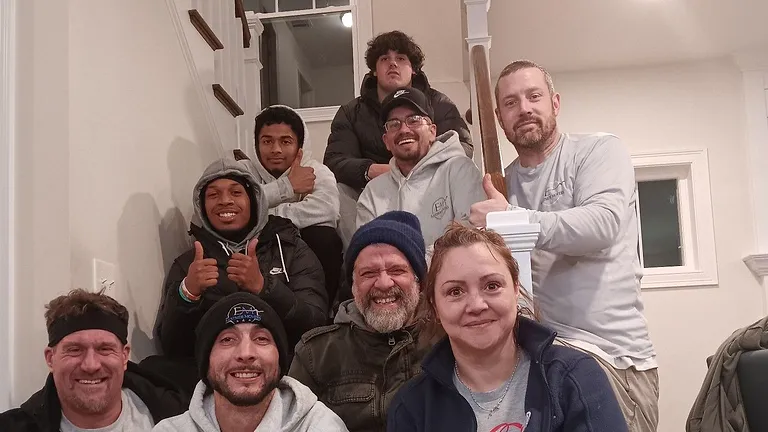
The Eastside Movers team gathered on an indoor staircase

Mill Building Moving FAQs

Another question? Call (774) 421-9389.

What if our mill's freight elevator fits the cart but not a long worktable?

Send us the cab's door opening and depth and the table's full size, and tell us whether its top or legs come off. We check the corridor and stair turns too. If it still will not fit, it stays off the list until the manager agrees another route, such as a different door.

Can our neighbors keep using the shared mill corridor while we load?

Usually yes. We stage inside your suite and send pieces to the elevator in small groups rather than lining the hall. Ask the manager which exits must stay clear and when neighbors expect deliveries, so the carry fits around their day.

Who reserves the alley when the loading door serves several mill tenants?

The property manager. Ask for the truck position, any delivery restrictions, how long the truck may stand, and your time slot. We plan the carry and loading order to fit that slot, and the manager sorts out any clash with other tenants' trucks or deliveries.

How much weight can the mill's freight elevator take?

Check the capacity posted on the elevator's inspection certificate, usually inside the cab, and ask the manager whether the building sets a lower limit. We plan each load under that number, which often means more trips with lighter carts in an older mill.

Plan your business move

Tell us both addresses, the building rules you know about, and the dates you cannot move. We will send back a written plan and estimate.

Call (774) 421-9389

Mon–Sat 8:00 AM – 5:00 PM

Call Now call 774-421-9389