Warehouse & Light Industrial

Print and Sign Shop Moving in Boston and MetroWest

Keep the printer technician's schedule separate from the move of substrate rolls, sheet stock, finishing tables, and completed orders.

(774) 421-9389
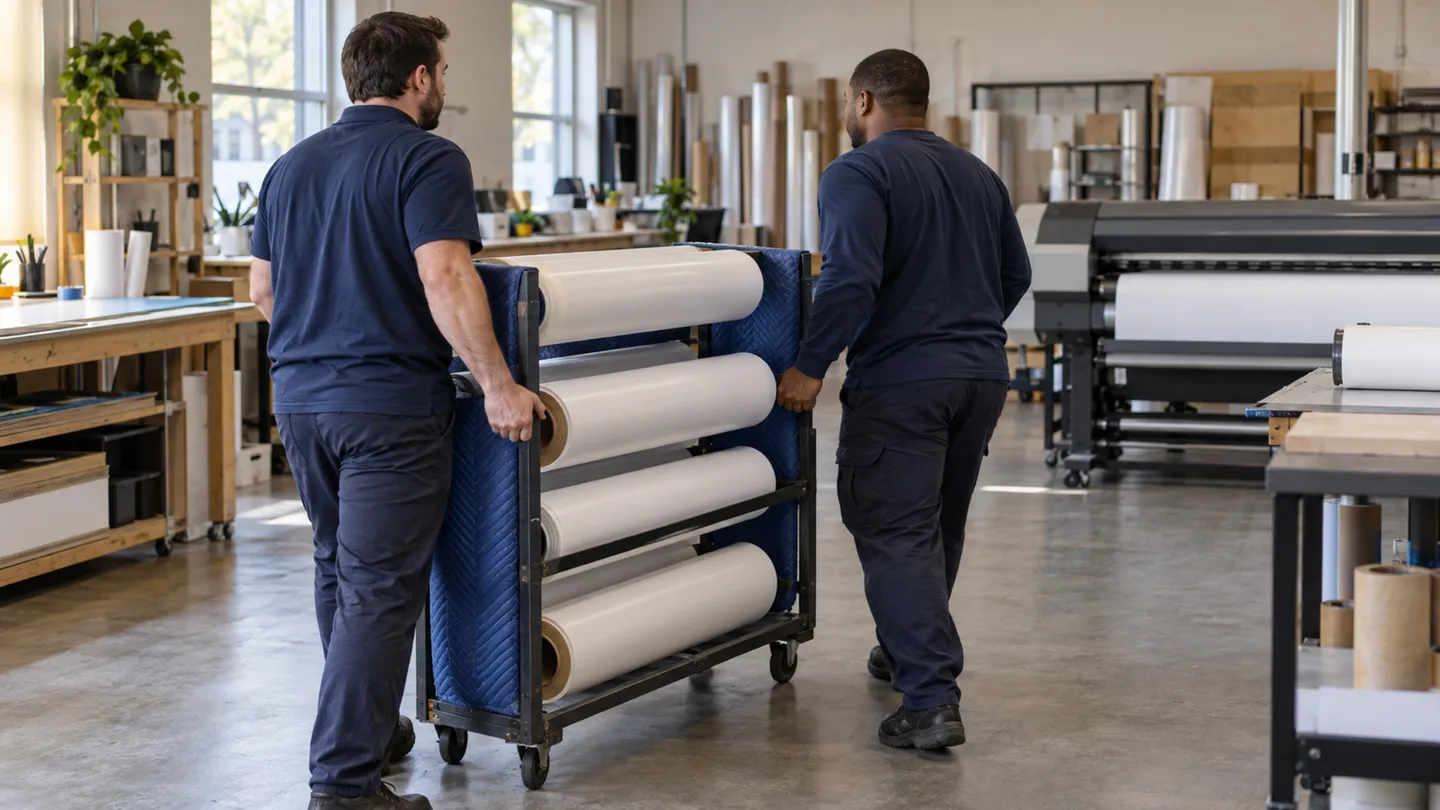
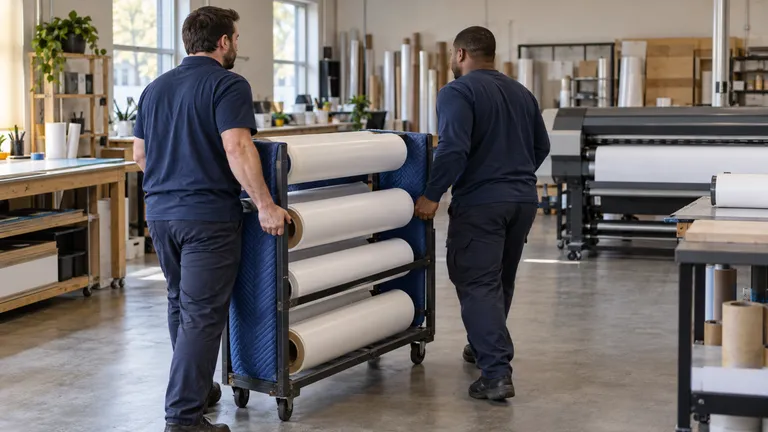
Print and Sign Shop moving in Boston and MetroWest: moving crew at work
  • Licensed & Insured Fully Covered
  • Owner-Operated By Tyler Trefrey
  • 10 States Northeast Served

Start your free print and sign shop move quote

verified For estimate purposes only credit_card_off No credit card required

Planning a Print and Sign Shop Move

A sign shop's printers decide the schedule. Wide-format roll printers and flatbed UV printers carry ink systems that the technician has to flush, cap, or otherwise prepare before the machine is moved, then restart and calibrate at the new shop, and vinyl cutters and large laminators often need the same care. Until the technician has been, nothing prints. So the technician's two visits come first, and our crew works around them.

Our crew moves everything else. Roll media, such as vinyl, banner, and laminate, is sorted by your staff into open-order material and general stock, then labeled by material and width. Rigid substrates like foam board, aluminum composite, and acrylic are grouped by type, with acrylic keeping its protective film on. Finished signs waiting for pickup travel under their order labels, apart from blank stock. Finishing tables, tool cabinets, sample walls, and the front counter follow your new layout. If you want a sign up at the new address, remember that the town usually requires a sign permit for it.

Who usually signs off
Shop owner or production manager who approves the equipment technician's visits, open-order list, and destination floor plan
Timing that works
Between the last print run at the old shop and the technician's restart at the new one, with open orders finished or released first; evening or weekend work on request.

What typically moves

  • Roll media and freestanding roll racks Sorted by staff into open-order and general stock; racks move empty.
  • Rigid substrate sheets Grouped by type with protective film left on and corners guarded.
  • Finished signs and panels awaiting pickup Travel under their order labels, face-protected and apart from blanks.
  • Finishing and weeding tables Blades and tools removed by staff; table parts tagged by station.
  • Vinyl, tape, and application supply cabinets Boxed by process area.
  • Front counter and sample walls Samples boxed by category; live order paperwork stays with staff.

Access and scheduling

Fix the production cutoff with your manager: which jobs finish at the old shop, which media stays near a working printer until the last run, and which orders can travel finished. The technician gives us the dates the printers go down and come back, and we move the stock, tables, and finished work between them. Weekend or evening loading is available on request.

Roll racks and long panels need measured routes, so send the longest dimensions and the clear widths of doors, turns, and any elevator. A shop in an I-495 flex park may share a dock with neighbors and need the truck position booked. A shop in Somerville or Boston may load at the curb and need a street-occupancy permit. Landlords in both settings often want our certificate of insurance on file, which we send on request.

Protection and handling

Media looks alike once it is off the rack, so labels go on the outside of every wrapped roll and sheet group: material, width, and whether it is reserved for an order. Roll ends are capped against crushing, and cores are supported so rolls do not bend. Sheets travel flat or on edge as the material calls for, with faces separated.

Finished signs are padded on their faces and edges and loaded apart from anything with sharp corners. Finishing tables lose their blades before we touch them. At the new shop, media goes onto its marked racks and finished orders go to the pickup area, so your staff can reconcile stock and call customers. Printers stay where the technician sets them.

Who does what

Some of this job belongs to other trades. The written plan names each one.

Wide-format printers, flatbeds, cutters, and laminators
Your equipment technician prepares, moves or supervises moving, restarts, and calibrates each machine.
Hardwired equipment, ventilation, and compressed air
A licensed electrician and the appropriate trades handle connections at both shops.
Open orders, color profiles, and the shop's own sign permit
Your production team manages jobs and files; the owner applies for any sign permit.

Not part of our work

  • Preparing, restarting, or calibrating printers and ink systems.
  • Deciding which media belongs to an open order or verifying stock totals.
  • Electrical, ventilation, or air connections.

Around Boston and MetroWest

Print and sign shops in this market sit in flex bays in the I-495 parks in Marlborough, Milford, Franklin, and Mansfield, in older industrial pockets in Somerville, Canton, and Norwood, and in Worcester's mill buildings. Flex bays usually have an overhead door; city shops often load through a storefront or a shared hallway.

The crew that shows up

Two Eastside Movers crew members outside a client's red front door

Print and Sign Shop Moving FAQs

Another question? Call (774) 421-9389.

Who prepares our wide-format printer before the shop move?

Its technician. They know how that model's ink system is flushed or capped, what has to be secured, and how it must travel. They also restart and calibrate it. If they release it for our crew to carry, we follow their instructions and check the route with them first.

How do we keep substrate reserved for open orders from being packed as general stock?

Your production manager marks the reserved rolls and sheets against the open-order list. They stay near the working printer until the last run, then travel under job labels. Everything else goes as general stock by material and width. Your staff check both after delivery.

Can printed sign panels ride with blank sheet stock?

Not in the same group. Finished panels have faces that scratch and a customer waiting for them, so they are padded and loaded apart from blank stock, under their order labels. At the new shop they go to the pickup area, and your team checks each order.

Do we need a permit to put our own sign up at the new shop?

Usually, yes. Most Massachusetts towns and cities require a sign permit from the building department before a business sign goes up, and some have design rules for a district. Your sign installer or the landlord can tell you what the new address needs. It is separate from the move.

Plan your business move

Tell us both addresses, the building rules you know about, and the dates you cannot move. We will send back a written plan and estimate.

Call (774) 421-9389

Mon–Sat 8:00 AM – 5:00 PM

Call Now call 774-421-9389