Retail, Restaurant & Hospitality

Bar and Brewery Moving in Boston and MetroWest

Back-bar sections, empty kegs, and movable cold-room fittings travel on a plan that leaves the brewhouse and alcohol inventory with their responsible parties.

(774) 421-9389
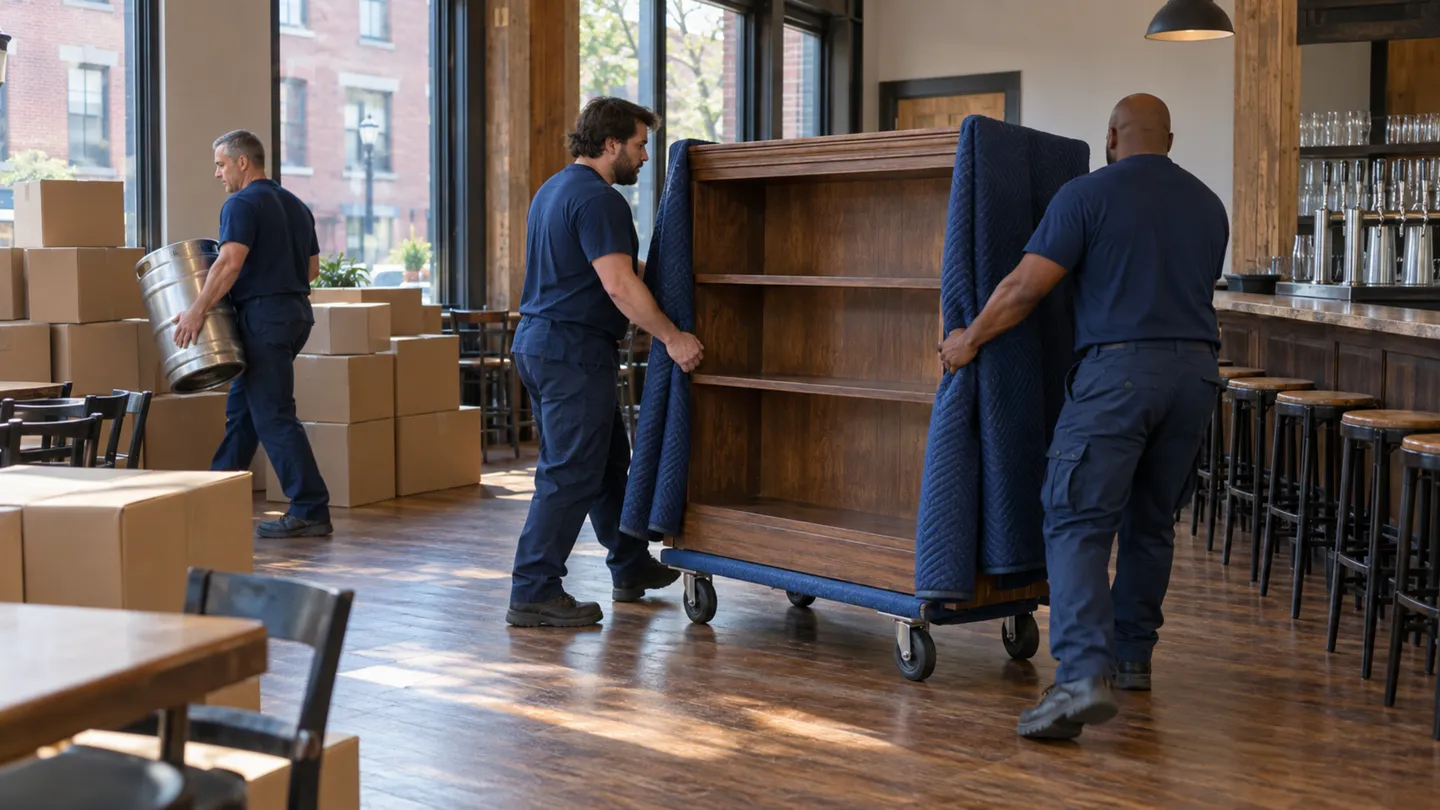
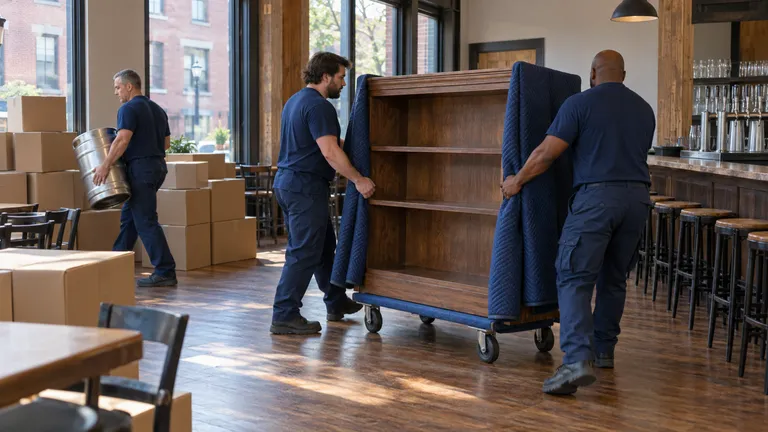
Bar & Brewery moving in Boston and MetroWest: moving crew at work
  • Licensed & Insured Fully Covered
  • Owner-Operated By Tyler Trefrey
  • 10 States Northeast Served

Start your free bar & brewery move quote

verified For estimate purposes only credit_card_off No credit card required

Planning a Bar & Brewery Move

A bar and a brewery move on different clocks, and neither clock is ours. For a bar, the license holder's change of location through the local licensing authority and the ABCC decides when the new room can pour, and the draft technician decides when the taps work. For a brewery, the brewhouse installer takes the vessels, glycol chiller, and process piping out and puts them back, and the federal brewer's notice has to cover the new address before brewing restarts there. Both usually carry a lease that says which back-bar millwork belongs to the landlord.

Inside those dates there is plenty for a crew. We take down the removable back-bar sections, number them to the new bar plan, pack glassware and bar tools by well, and carry stools, high-tops, tasting-room tables, merchandise racks, and the office. Filled product stays with the license holder. Empty kegs at a bar usually belong to the distributor and go back on its truck; a brewery's own empty cooperage can ride with us once your staff has confirmed every shell is empty.

Who usually signs off
Bar owner or brewery operator, with the license holder, bar manager, brewhouse installer, and landlords confirming their parts
Timing that works
After last call at the old address and before the new bar opens under its approved license, with brewhouse and draft installers booked on their own dates; evening or weekend loading on request.

What typically moves

  • Removable back-bar cabinets and bottle-display shelving Numbered against the new bar plan; glass shelves ride wrapped and apart from their frames.
  • Speed rails, bar mats, and freestanding service stations Your bar manager marks which well each piece belongs to before anything is packed.
  • Empty brewery-owned kegs and keg dollies Staged away from filled product after your staff confirms each shell is empty.
  • Tap handles, glassware, and bar tools Handles are bagged by tap position; glassware is packed in divided cartons by well.
  • Taproom stools, high-tops, and communal tables Tagged by room or zone so the floor can be set once the bar is clear of installers.
  • Merchandise racks and the brewery office Shirts, glassware for sale, and office files go last so the front room stays open for trades.

Access and scheduling

Set the brewhouse dates first, because the installer needs clear floor around the vessels at both ends and may bring its own equipment for the heavy pieces. The draft technician usually comes next at the new space to run and balance the lines. Our loads fit around both: taproom and office before the installer starts, back-bar and wells after last call, and the final furniture once the trades finish, with evening or weekend loading on request.

Access differs by building. A Boston or Somerville bar may load from a cellar hatch or a street door with a tight turn onto the sidewalk, and holding the curb may need a street-occupancy permit. A taproom in an industrial park usually has an overhead door, but the landlord may share the dock and set its hours. When a building wants a certificate of insurance before move day, we can issue one on request.
Protection and handling

Back-bar millwork is finished wood, mirror, and glass held together with small fittings that go missing easily. Before a section comes off the wall, your bar manager and our crew photograph the arrangement, bag the brackets with the section's number, and lift out mirrors and glass shelves to be wrapped on their own. Finished edges get pads and corner guards for the carry through a narrow bar door.

Glassware is packed in divided cartons by well, pint glasses apart from stemware and shaker tins. Kegs ride upright and strapped, away from wrapped cabinetry. At the new space we set the bar sections where the plan puts them and leave working room around the draft tower and cooler for the technician. Product and anything perishable stay with your staff.

Who does what

Some of this job belongs to other trades. The written plan names each one.

Brew kettles, fermenters, brite tanks, glycol chiller, and process piping
Your brewhouse installer or equipment rigger takes the system out, moves it, and reinstalls and tests it. We work around the space they need.
Draft system, trunk lines, and cooler connections
The draft technician pulls and reruns the lines; licensed trades handle any gas, water, or electrical connections at either address.
License transfer, brewer's notice, and alcohol inventory
The license holder handles the change of location with the local licensing authority, the ABCC, and federal regulators, and decides how filled product travels.

Not part of our work

  • Carrying filled kegs, cases, or any alcohol, or deciding how beverage stock moves.
  • Taking apart, moving, or reinstalling brewhouse vessels, chillers, or fixed process equipment.
  • Any work on draft lines, glycol, gas, water, or electrical connections.

Around Boston and MetroWest

Bars in Boston's older neighborhoods often sit over a cellar reached by a steep stair or a sidewalk hatch, with a curb that is hard to hold for a truck. Taprooms in converted industrial space in Somerville, Worcester's mill buildings, and the I-495 industrial parks in Franklin and Mansfield usually have an overhead door and a larger floor, with the landlord setting dock hours.

The crew that shows up

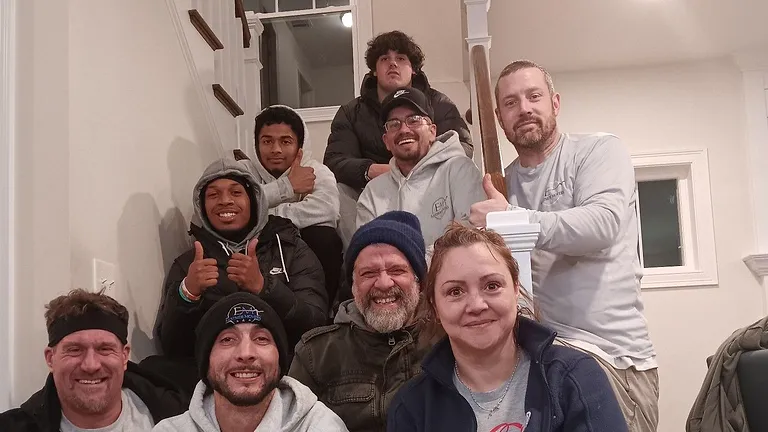
The Eastside Movers team gathered on an indoor staircase

Bar & Brewery Moving FAQs

Another question? Call (774) 421-9389.

Can your crew take the filled kegs with the empty shells?

No. Filled product stays with the license holder, who decides how it moves once the new premises are approved. Empty kegs at a bar usually belong to the distributor and go back on the distributor's truck. A brewery's own empty cooperage can ride with us after your staff has checked every shell and marked it empty.

Who takes apart the brewhouse before the taproom furniture leaves?

Your brewhouse installer or the equipment company that set it up. They drain and disconnect the vessels, handle the heavy lifting, and reinstall and test at the new site. Give us their dates and the floor space they need, and we schedule the taproom, office, and merchandise so boxes are never in the installer's way.

Which parts of our back bar can actually leave with us?

Check the lease first, because back-bar millwork is often treated as a landlord fixture. Pieces that are yours and freestanding or screwed-in, such as bottle-display cabinets and shelving, can be numbered, taken down, and rebuilt to the new plan. Anything tied into plumbing, the draft system, or building wiring waits for its trade.

How should we plan a load from a bar cellar in Boston?

Measure the cellar stair, landing, and street door against the biggest back-bar section, and note whether the exit is a door or a sidewalk hatch. Confirm with your landlord which entrance and hours you can use, and ask the city about a street-occupancy permit. We break the load into pieces that clear the route.

Plan your business move

Tell us both addresses, the building rules you know about, and the dates you cannot move. We will send back a written plan and estimate.

Call (774) 421-9389

Mon–Sat 8:00 AM – 5:00 PM

Call Now call 774-421-9389