Retail, Restaurant & Hospitality

Coffee Shop Moving in Boston and MetroWest

Your espresso technician handles the machines and grinders; we move the seating, customer counter pieces, and condiment stations around that work.

(774) 421-9389
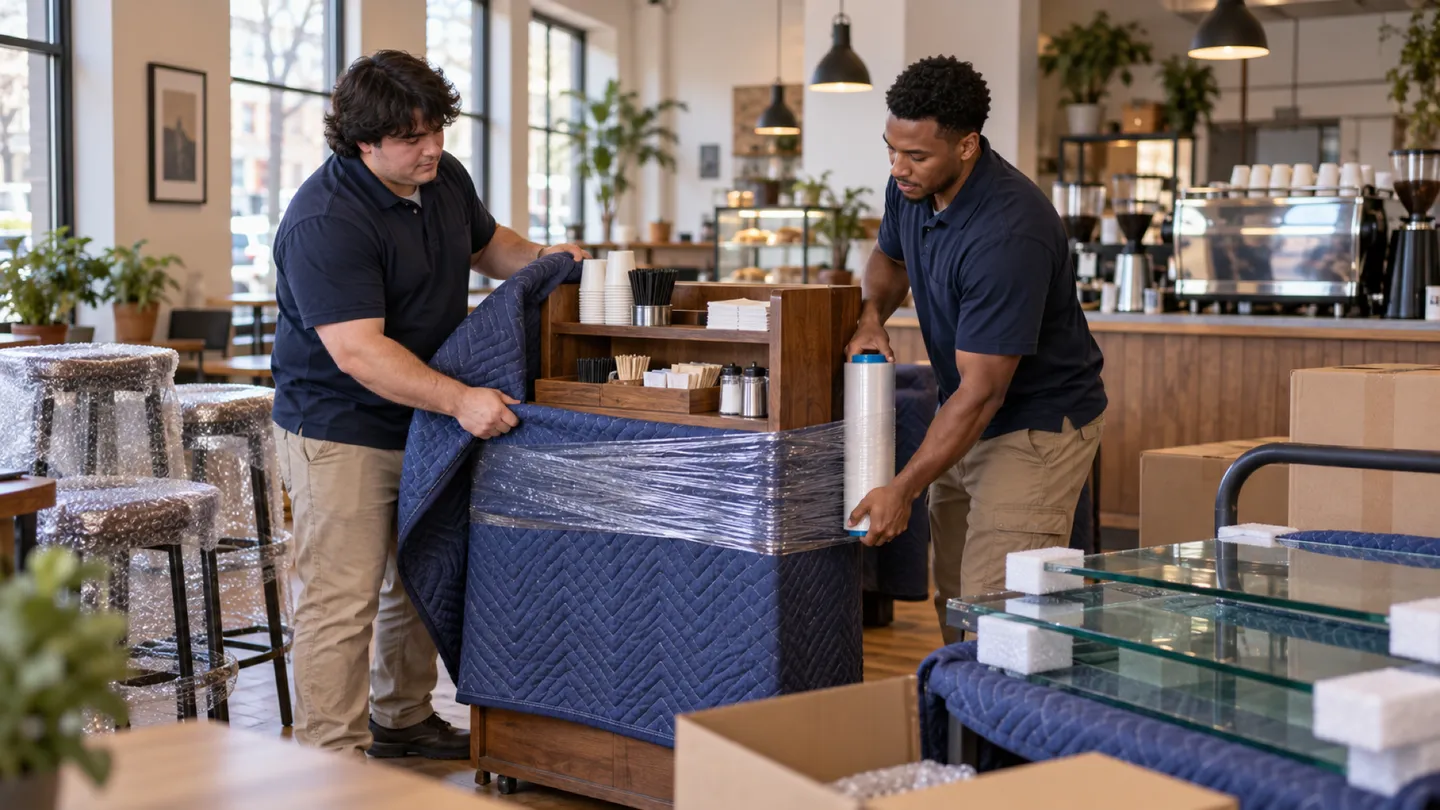
Coffee Shop moving in Boston and MetroWest: moving crew at work
  • Licensed & Insured Fully Covered
  • Owner-Operated By Tyler Trefrey
  • 10 States Northeast Served

Start your free coffee shop move quote

verified For estimate purposes only credit_card_off No credit card required

Planning a Coffee Shop Move

A café can look finished from the sidewalk while the counter still cannot pull a shot. The espresso machine is plumbed to the water supply through a filter, usually runs on its own heavy circuit, and has a boiler the technician drains before it travels, since water left inside can freeze and crack it in a cold truck. The grinders need their burrs checked and dialed in again at the new address. Until that technician has been, the shop is a room with chairs in it.

So the plan starts at the counter. Your manager sketches where the register, pickup ledge, condiment bar, and pastry case sit in the new space, and we tag the freestanding pieces to those spots. Our crew carries the seating, retail shelving, freestanding cases, cup and syrup stock, and the back-room supplies, and leaves the bar area open for the technician on both ends. If the new shop is in a Cambridge or Brookline storefront with no rear door, we plan the carry through the front around the neighbors' hours.

Who usually signs off
Coffee shop owner or operator, with the store manager and espresso equipment technician confirming the closing and setup sequence
Timing that works
After the last afternoon rush at the old shop, around the espresso technician's drain-down and setup visits; evening or weekend loading on request.

What typically moves

  • Café tables, benches, and stools Tagged to the seating sketch; removable tops stay with their bases.
  • Freestanding condiment bars and lid stations Staff empty the bins; loose inserts are bagged with the unit.
  • Pickup shelves, menu boards, and queue rails Marked for the order or pickup side so the customer path goes in first.
  • Cup, lid, and syrup stock with the back-room shelving Boxed by the shelf it will fill, with the shelving itself broken down and bagged.
  • Freestanding pastry cases and retail bean shelving Emptied by staff; glass comes out and is wrapped apart from the frame.
  • Barista mats, knock-box stands, and rolling carts Cleaned and grouped for the working side of the counter.

Access and scheduling

Pick the cutoff first. Staff can clear spare seating, retail beans, and reserve cups while the counter keeps serving, and the condiment bar and pickup shelf come down after the doors close. Ask the espresso technician when they will drain and pull the machine and when they can set it at the new shop, then we fit our loads so their working space stays empty. Evening or weekend moves are available on request.

Storefront cafés rarely have a dock. In Harvard Square, Central Square, or Coolidge Corner the truck may stand at a metered curb, and a building with apartments upstairs may limit hours or ask for proof of insurance, which we can send. A plaza café along Route 9 or in downtown Framingham usually shares a rear door with its neighbors. Measure the longest counter section against every door and turn before the date.

Protection and handling

Condiment bars and pickup shelves shed small parts: dispenser inserts, dividers, shelf pins, trays. Those come off first and go into a bag taped to the unit they belong to. Finished counter fronts get pads and corner guards, and pastry-case glass rides in its own wrapped package rather than loose inside the case.

At the new shop, the order point and pickup ledge go in before seating so your manager can walk the line a customer will take. Tables and stools follow once the path is clear. Runners and door-frame pads cover the carry through a front door that stays in public use. Opened milk, syrups, and prepared food stay with your team, and the machine and grinders stay with the technician from drain-down to first shot.

Who does what

Some of this job belongs to other trades. The written plan names each one.

Espresso machine, grinders, and brewers
Your espresso technician drains, packs, moves, installs, and calibrates them. We keep the counter route clear for that visit.
Water line, filtration, and the machine's dedicated circuit
A licensed plumber and electrician handle the water and electrical connections at both shops, working with the technician.
Refrigerated cases and under-counter coolers
The equipment vendor decides how each unit is taken out of service and restarted; staff handle the contents.

Not part of our work

  • Water or electrical work of any kind, including hooking up or testing the espresso machine.
  • Packing or carrying the espresso machine and grinders in place of the technician.
  • Deciding which opened or chilled food can be kept.

Around Boston and MetroWest

Café moves in Cambridge and Brookline are storefront moves: front doors, metered curbs, and neighbors upstairs. Boston shops in the Financial District often sit on the ground floor of an office tower, with the loading dock and freight elevator booked through building management. MetroWest cafés along Route 9 and in downtown Framingham usually have rear doors onto a shared lot.

The crew that shows up

Eastside Movers crew in the snow outside Massachusetts colonials in winter

Coffee Shop Moving FAQs

Another question? Call (774) 421-9389.

Should our espresso technician come before the seating is loaded?

Usually yes at the old shop and first at the new one. The technician drains and pulls the machine and grinders, and we clear the customer side around that visit. At the new space, the technician needs the counter area empty to set the machine, so seating and shelving can be placed while they work, as long as their path stays open.

How do we keep the pickup and condiment areas in the right order at the new shop?

Mark the order point, pickup ledge, and condiment bar on a simple sketch before packing. Each shelf, divider, and dispenser gets a tag for one of those positions, and its small parts are bagged with it. At delivery your manager walks the customer path before staff restock cups and lids.

Can the pastry case move with its glass shelves inside?

No. Shelves and any loose glass come out and are wrapped separately, with their positions marked. If the case is refrigerated, its vendor decides how it is shut down and restarted. A dry, freestanding case we can pad and carry once staff have emptied it, then set the shelves beside it for your team to put back.

What can our baristas pack while the coffee counter is still serving?

Reserve cups and lids, unopened beans, retail stock, spare pitchers, and anything seasonal. Keep the pickup shelf, condiment bar, and the tools on the bar in use until close. We label the cleared cartons for the new station and take the working counter pieces last.

Plan your business move

Tell us both addresses, the building rules you know about, and the dates you cannot move. We will send back a written plan and estimate.

Call (774) 421-9389

Mon–Sat 8:00 AM – 5:00 PM

Call Now call 774-421-9389