Retail, Restaurant & Hospitality

Salon and Barbershop Moving in Boston and MetroWest

Keep each chair with its styling station and tools; your licensed trade handles the plumbed backwash units before and after the move.

(774) 421-9389
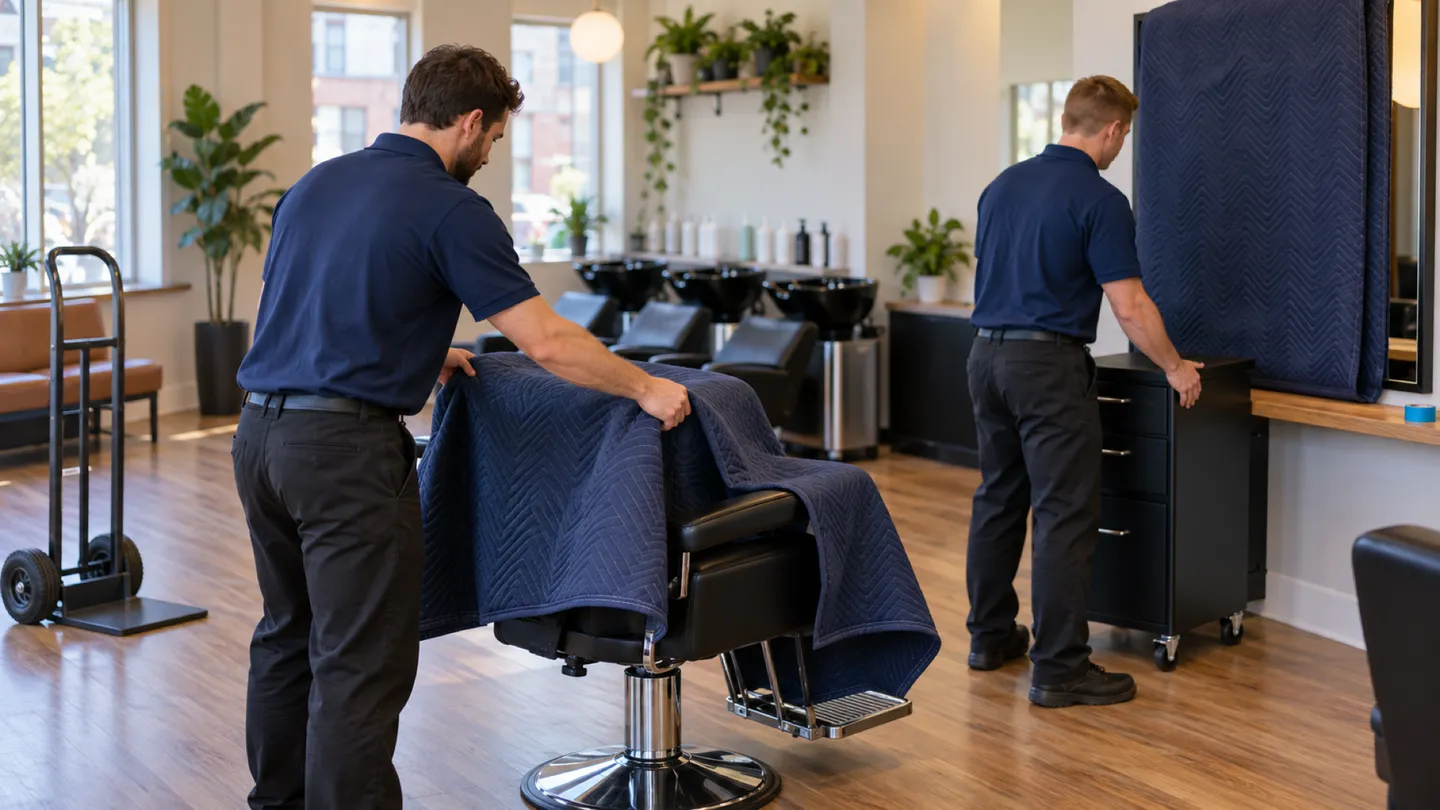
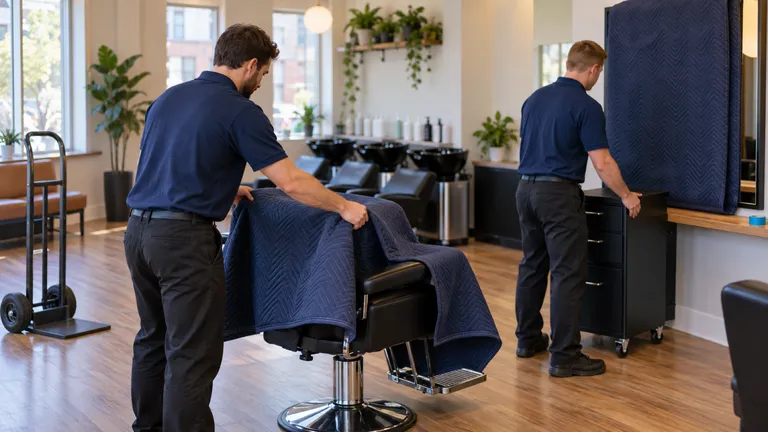
Salon & Barbershop moving in Boston and MetroWest: moving crew at work
  • Licensed & Insured Fully Covered
  • Owner-Operated By Tyler Trefrey
  • 10 States Northeast Served

Start your free salon & barbershop move quote

verified For estimate purposes only credit_card_off No credit card required

Planning a Salon & Barbershop Move

In Massachusetts a salon or barbershop is licensed for its address by the Board of Registration of Cosmetology and Barbering, so the new shop has to be licensed and inspected before a client sits down. That inspection, and the plumber who sets the shampoo bowls, usually decide the reopening date. The move fits between the last booked client and the inspection.

The pieces themselves are few but awkward. Hydraulic styling and barber chairs are heavy for their size, and a hydraulic base should stay upright so it does not leak. Stations and mirror consoles have to line up with outlets and the new spacing. Shampoo bowls and backwash units are plumbed, so the plumber disconnects them and reconnects them. We number every station on the new floor sketch, tag each chair, station, mirror, and trolley to its number, and set them in place so each stylist or barber walks in to their own station. Color, chemicals, blades, and hot tools stay with your staff.

Who usually signs off
Salon or barbershop owner, with the manager confirming the appointment cutoff and each stylist's station assignment
Timing that works
After the last booked client and before the new shop's state license inspection and first appointments, with the plumber's visits at both ends; evening or weekend moves on request.

What typically moves

  • Hydraulic styling and barber chairs Kept upright on a dolly; headrests and footrests bagged with the chair.
  • Styling stations and mirror consoles Drawers emptied, mirrors taped and padded, tagged to the station number.
  • Stylist trolleys and color carts Emptied of chemicals and tools by staff; trays taped in.
  • Hood dryers and freestanding processing units Unplugged, arms locked or removed, carried upright.
  • Retail product shelving Staff pack the product; shelves come down and are bagged with their hardware.
  • Reception desk and waiting-area seating Sections numbered and placed so your manager can check the front path.

Access and scheduling

Book the plumber first. They cap the shampoo bowls at the old shop and need a clear wash area at the new one, and the state inspection usually wants the shop fully set up. We fit the carrying between those dates, often an evening or a Sunday or Monday, when many shops are closed, on request.

Measure the chair bases and mirror consoles against the doors and the tightest turn. A second-floor salon in a Back Bay or South End row building may have a narrow stair and no elevator, so chairs go up one at a time. Plaza shops along Route 9 or in the I-495 towns usually have a rear door shared with neighbors. If the building wants a certificate of insurance, we can issue it on request.
Protection and handling

Salon chairs are top-heavy: the seat swivels and the base catches every threshold. We lower the chair fully, lock or tape the swivel if the design allows, pad the upholstery and chrome, and move it upright on a dolly. Removable headrests and footrests go into a bag tied to the chair.

Mirrors are taped across the face and padded, and station cabinets get corner pads for narrow doorways. At the new shop, each chair, station, and trolley goes to its number on the sketch, and the wash area is left clear for the plumber. Runners cover new floors from the door to the stations. Your staff unpack their own kits and check that every chair turns without hitting its neighbor.

Who does what

Some of this job belongs to other trades. The written plan names each one.

Shampoo bowls, backwash units, and pedicure chairs
Your licensed plumber disconnects the water and drains and reconnects and tests them at the new shop.
Wall mirrors, built-in stations, and wired lighting
The landlord confirms what can leave; your installer or electrician takes down and remounts fixed pieces.
Shop license, inspection, and chemical stock
The owner handles the state license and inspection; staff pack color, chemicals, blades, and tools.

Not part of our work

  • Plumbing or electrical work at either shop.
  • Removing built-in stations or wall mirrors.
  • Packing chemicals, blades, or stylists' personal kits.

Around Boston and MetroWest

Salons and barbershops here are mostly street-front or second-floor units: Back Bay and the South End in Boston, Central and Davis Squares, Coolidge Corner, and the downtowns of Framingham and Franklin, many in older buildings with narrow stairs. Plaza units on Route 9 and in the I-495 towns trade stairs for shared rear doors.

The crew that shows up

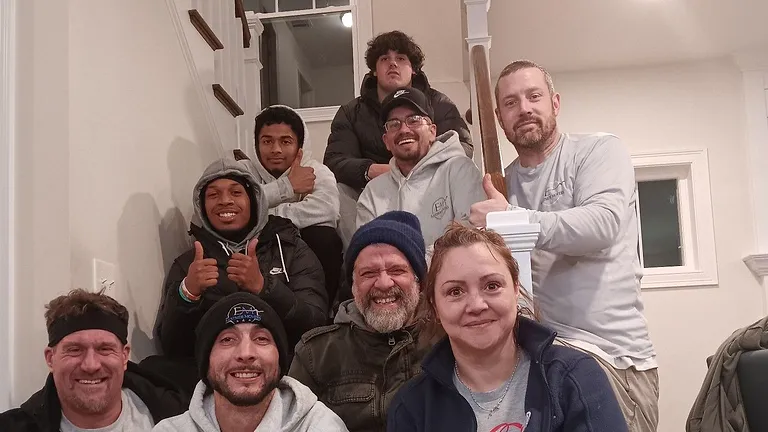
The Eastside Movers team gathered on an indoor staircase

Salon & Barbershop Moving FAQs

Another question? Call (774) 421-9389.

Should our backwash basins come out before the styling chairs?

Usually the plumber goes first. Once the bowls are disconnected, we clear the wash area and carry any released units the way the plumber directs. Styling stations and chairs elsewhere in the shop can move in whatever order your last appointments allow.

How do we keep each barber chair matched to its mirror and cabinet?

Number the stations on the new sketch and write that number on the chair, cabinet, mirror, and any detachable chair parts. We unload each group straight to its number. Your barbers then set up their tools and check that each chair turns freely without hitting its neighbor.

Can our stylists leave color and tools in their rolling carts?

No. Color, developer, blades, and hot tools come out and travel with your staff, because open chemicals spill and blades cut through wrap. Once the cart is empty, we tape the trays, tag it for its stylist, and place it beside the station.

Why do the hydraulic chairs have to stay upright during the move?

A hydraulic pump can leak fluid if it is laid on its side, and the base is where most of the weight is. We keep each chair upright on a dolly, lowered fully, with the seat padded. If a chair is too tall for a door that way, the maker's instructions may allow the seat to come off the base.

Plan your business move

Tell us both addresses, the building rules you know about, and the dates you cannot move. We will send back a written plan and estimate.

Call (774) 421-9389

Mon–Sat 8:00 AM – 5:00 PM

Call Now call 774-421-9389