Property, Institutional & Government

Courthouse Administrative Moving in Boston and MetroWest

Plan the clerk's counter and back offices by room while the court facility decides crew entry, escorts, and the permitted work window.

(774) 421-9389
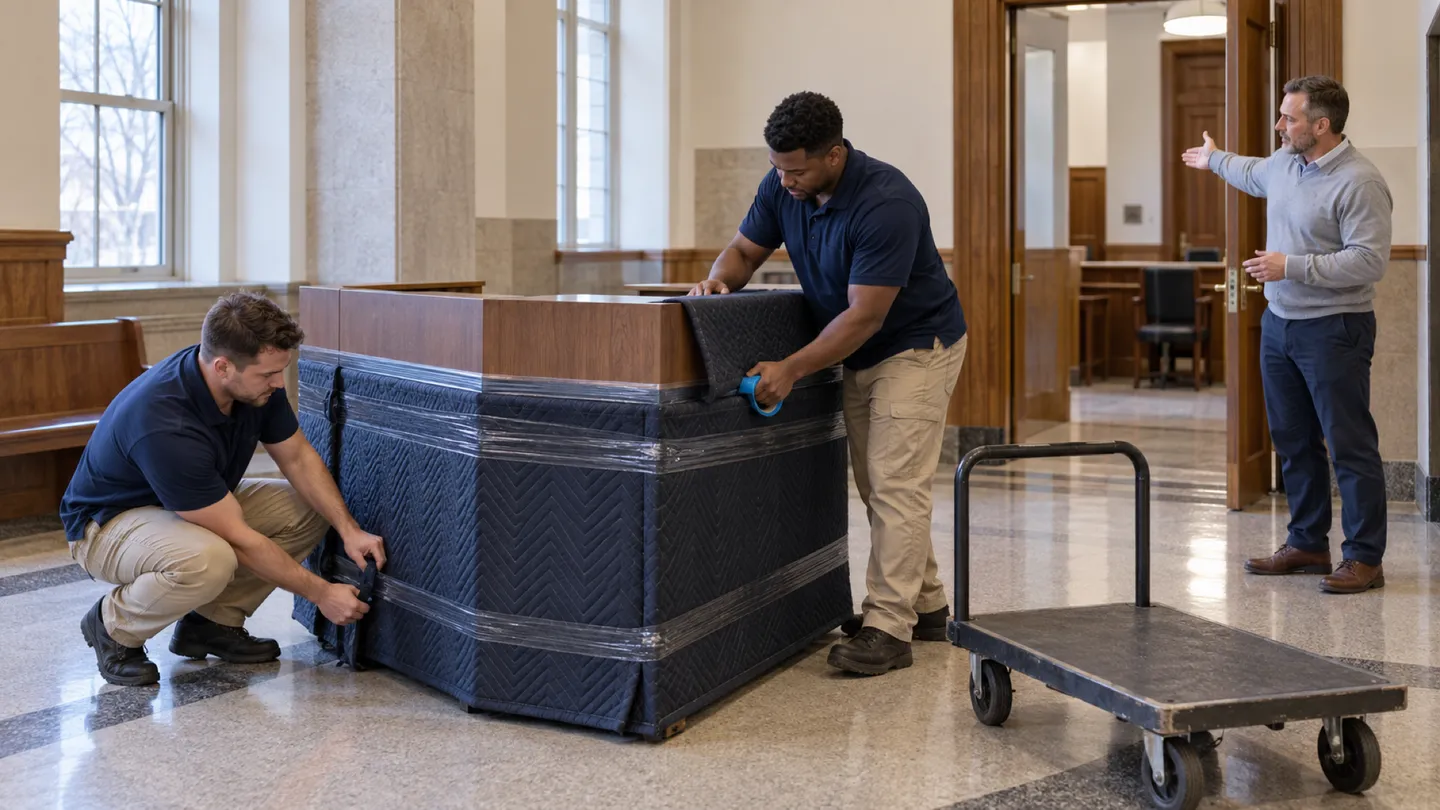
Courthouse Administration moving in Boston and MetroWest: moving crew at work
  • Licensed & Insured Fully Covered
  • Owner-Operated By Tyler Trefrey
  • 10 States Northeast Served

Start your free courthouse administration move quote

verified For estimate purposes only credit_card_off No credit card required

Planning a Courthouse Administration Move

Court moves we handle are on the administrative side: the clerk-magistrate's office, the Registry of Probate counters, and court administration offices. It is not about courtrooms, and it is never about evidence or exhibits, which stay with court staff. In Massachusetts, court buildings are run by the Trial Court, and entry is controlled by court officers at a security screening point, so every crew member and every cart goes through screening unless the facility arranges a separate delivery entrance.

The work itself is a counter-and-back-office move. The clerk decides which counter windows stay open, which docket and index shelving staff still need, and when each back-office room is released. We label every counter module, workstation, cabinet, and released carton by its new position, move the back offices first, and move the counter on the cutover day the clerk sets. Court staff pack and carry active filings, and nothing in a clerk's file room is opened or re-sorted by our crew.

Who usually signs off
Clerk's office administrator or court facilities lead, with court operations approving counter closures and room access
Timing that works
On days and hours the court facility approves, around the clerk's public counter and the hearing calendar, often late in the day or when the court is not in session.

What typically moves

  • Clerk counter modules and transaction ledges Moved on the cutover day; open windows stay in service until then.
  • Docket and index shelving Staff pack or release the volumes; shelving follows once empty.
  • Filing intake trays and sorting units Staff clear active filings first; units move empty.
  • Clerk workstations and pedestals Tagged by position on the new plan.
  • Calendar boards and freestanding displays Moved face to face and set where staff want them.
  • Administrative conference tables and staff-room furniture Moved once the facility releases the route.

Access and scheduling

The facility sets the rules. Court officers screen people and equipment, and the facility decides whether crew names are needed in advance, where we check in, whether an escort is required, and which elevator and corridor we may use. Carts crossing a busy lobby during sessions are rarely allowed, so work often happens late in the day, after the counter closes, or on days the court approves; evening or weekend windows are the facility's call.

The clerk's public hours and the hearing calendar set the order. Back offices move first, the counter moves on a day the clerk picks, and anything needed for scheduled proceedings stays where staff can reach it. If the building wants a certificate of insurance, we supply one on request, and if the facility changes the route, work pauses until the new route is released.

Protection and handling

In a clerk's office, loose paper is the first risk. Staff clear intake trays, pull active filings, and mark which cabinets and cartons are released. Our crew labels those by destination and keeps them apart from anything staff are still working on. We do not examine or sort court files.

Court buildings are busy public spaces, so counter faces, cabinet corners, and table edges are padded before they pass through corridors, and runners cover the route the facility approves. Loads are kept small enough to clear screening and the elevator. At the new office, each piece goes to its labeled position, and staff check the counter setup before the next public opening. Keys to locked cabinets stay with the clerk's office manager throughout.

Who does what

Some of this job belongs to other trades. The written plan names each one.

Screening, crew entry, escorts, and routes
Court officers and the court facility set the requirements and grant access.
Filings, exhibits, and material held for proceedings
Court staff keep them, pack them, or carry them; they are outside our scope.
Court systems, accounts, and networks
The court's IT staff handle systems and testing; we move released desk-level equipment.

Not part of our work

  • Moving exhibits, evidence, or material held for proceedings.
  • Opening court files or deciding what stays available to the public.
  • Issuing credentials or configuring court systems.

Around Boston and MetroWest

Court administration offices in this market range from the large court buildings near Government Center and Pemberton Square in Boston, with busy screening lines and shared elevators, to district and probate courthouses in Dedham, Framingham, and Worcester, where one entrance usually serves both the public and deliveries.

The crew that shows up

Two Eastside Movers crew members outside a client's red front door

Courthouse Administration Moving FAQs

Another question? Call (774) 421-9389.

Can the clerk's public counter stay open while the back office moves?

Yes. The clerk marks which windows stay open and which reference shelving they need. We move the back offices first, keeping carts away from the public line, and move the counter on the cutover day. The facility confirms our route will not cross the public entrance during hours.

Will your crew go through court officer screening?

Yes, unless the facility arranges a separate delivery entrance. Every crew member and cart goes through, so we keep loads small and bring the tools the job needs and no more. Send the facility's instructions for crew names, check-in, and escorts, and we follow them.

What happens to exhibits and materials needed for a hearing?

They stay with court staff and outside our work. Before we label anything, the clerk's team marks every cabinet, carton, or desk holding such material and decides how it moves. We move the shelving and furniture once staff have emptied it.

How should we map the new clerk stations before the move?

Number each counter window, workstation, and reference area on the new plan, and mark the matching pieces at the old office with the same number. Flag the stations that must be ready for the next opening, and we place those first. Court staff and IT then check the setup.

Plan your business move

Tell us both addresses, the building rules you know about, and the dates you cannot move. We will send back a written plan and estimate.

Call (774) 421-9389

Mon–Sat 8:00 AM – 5:00 PM

Call Now call 774-421-9389