Retail, Restaurant & Hospitality

Auto Parts Store Moving in Boston and MetroWest

Keep dense parts inventory tied to its aisle and bin number while freestanding shelving, counter fixtures, and stock move to a new store.

(774) 421-9389
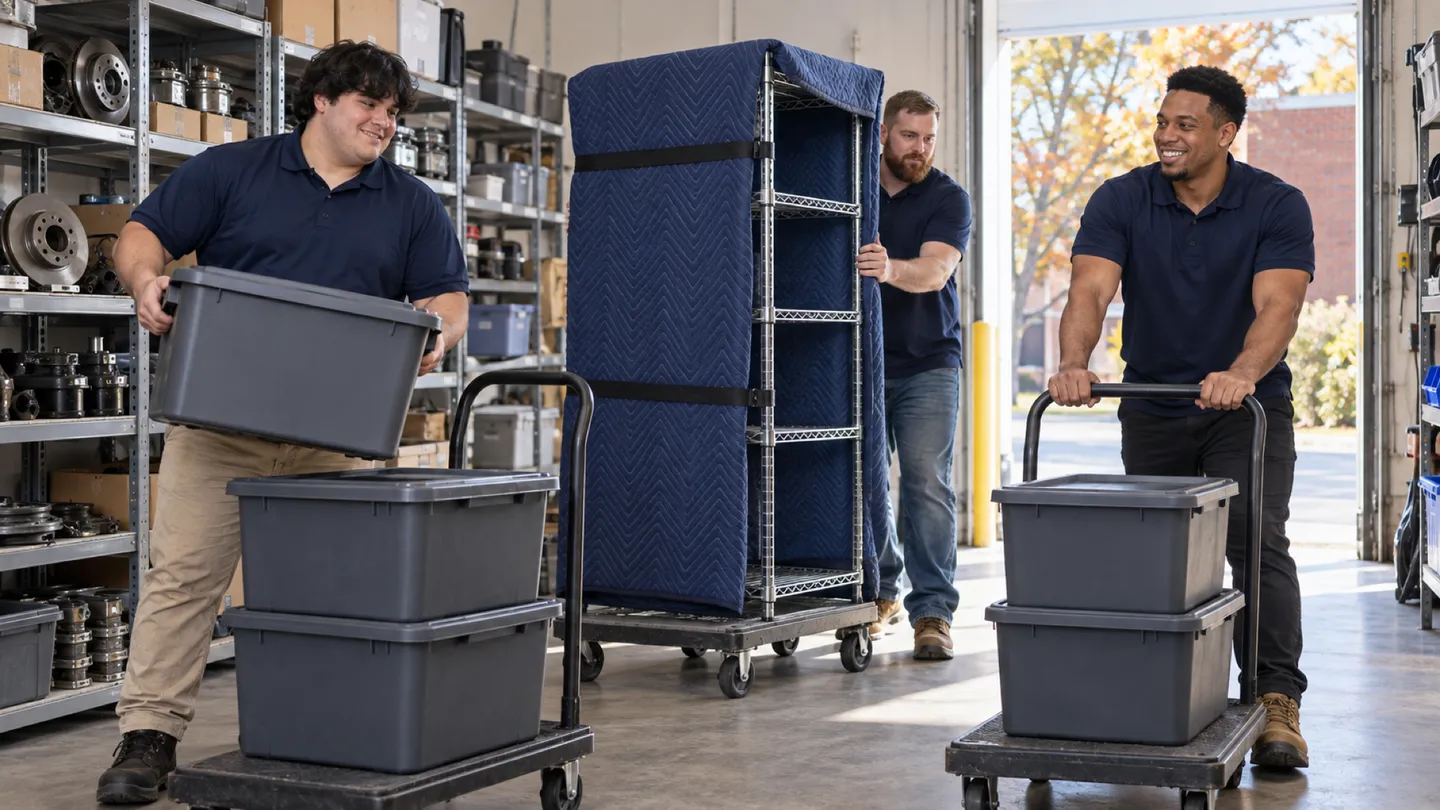
Auto Parts Store moving in Boston and MetroWest: moving crew at work
  • Licensed & Insured Fully Covered
  • Owner-Operated By Tyler Trefrey
  • 10 States Northeast Served

Start your free auto parts store move quote

verified For estimate purposes only credit_card_off No credit card required

Planning a Auto Parts Store Move

Parts stores are heavy in a way most retail is not. Brake rotors, drums, and calipers come boxed but dense, a single aisle of steel bin shelving weighs more than most office suites, and the whole store works by location: the counter person looks up a part and walks to an aisle and bin. If the stock lands in the new store without its bin locations, the counter cannot find anything on opening day.

So the move runs on your bin map. Your parts lead writes a crosswalk from each old aisle and bin to its new spot, and every container we pack carries the new location. Shelving sections go in first at the new store so each aisle can be filled from its own stack. Batteries, oil, antifreeze, and aerosols stay out of our load, because hazardous stock has its own shipping rules and usually goes back through your supplier. Cores waiting for return keep their own pallet, apart from sellable stock.

Who usually signs off
Store owner or operations manager, with the parts lead approving the bin map and stock release sequence
Timing that works
After the last counter orders at the old store and before the new counter opens, with the stock aisles moving first; evening or weekend loading on request.

What typically moves

  • Steel bin shelving and divider trays Emptied by aisle, broken into sections, clips and dividers bagged with each section.
  • Brake rotors, drums, and calipers in their boxes Packed in small, strong loads so no carton is too heavy to lift safely.
  • Filters, belts, and boxed maintenance parts Packed by bin with the new aisle and bin written on two faces.
  • Fastener drawers and small-parts cabinets Drawers taped shut or boxed; each insert keeps its cabinet position.
  • Counter cabinets and catalog stations Moved last; the counter terminals are wrapped and hooked back up at the new counter.
  • Wiper, bulb, and accessory displays Hooks and shelves bagged with their display; stock boxed by display.

Access and scheduling

Pick one aisle to keep for the last counter orders and pack the rest first. Staff finish the final pickups from that aisle while our crew empties and breaks down the others. At the new store, the shelving has to be standing before any stock arrives, so the first load is usually shelving alone.

Parts stores in this market are often in plaza units on Route 1 or Route 9 with a rear door onto a shared lane, or in flex units in the I-495 parks with an overhead door. Heavy stock means a lot of hand-truck trips, so find out where the truck can stand closest to the stockroom and how long the landlord allows. If either building wants a certificate of insurance, we issue one on request. Loading after hours or on a weekend can be arranged.
Protection and handling

Weight is the main risk. Rotors and drums are packed a few to a carton or in small bins, never in the bottom of a big carton under lighter stock, and heavy containers ride low on the truck. Fastener drawers are taped or boxed so nothing spills, and small-parts inserts stay in order.

Steel shelving has sharp edges, so door frames on the route are padded and uprights are carried, not dragged, across finished floors. At the new store, shelving is set to your layout and checked for level before containers go into the aisles. Your staff put parts into their final bins and verify counts against the system, and anything that arrives without a readable location label is set aside in one spot for them to sort.

Who does what

Some of this job belongs to other trades. The written plan names each one.

Batteries, oil, antifreeze, aerosols, and cores
Your team and your parts supplier handle hazardous stock and core returns under their own shipping rules.
Shelving fastened to walls or floors
Your fixture installer releases and reinstalls anchored sections. We move freestanding ones.
Point-of-sale, catalog software, and the store network
Your technology provider moves accounts and tests the system. We reconnect the desk-level computers and printers.

Not part of our work

  • Carrying batteries, fluids, aerosols, or any stock marked hazardous.
  • Counting stock, resolving shortages, or assigning bin numbers.
  • Removing or anchoring shelving fastened to the building.

Around Boston and MetroWest

Parts counters around Boston tend to sit in plaza units along Route 1 in Norwood and Dedham, Route 9 in Framingham, and the smaller retail strips of Quincy and Braintree, with flex units in the Milford and Franklin industrial parks serving as warehouses. Plaza units usually share a rear lane; flex units have their own overhead doors.

The crew that shows up

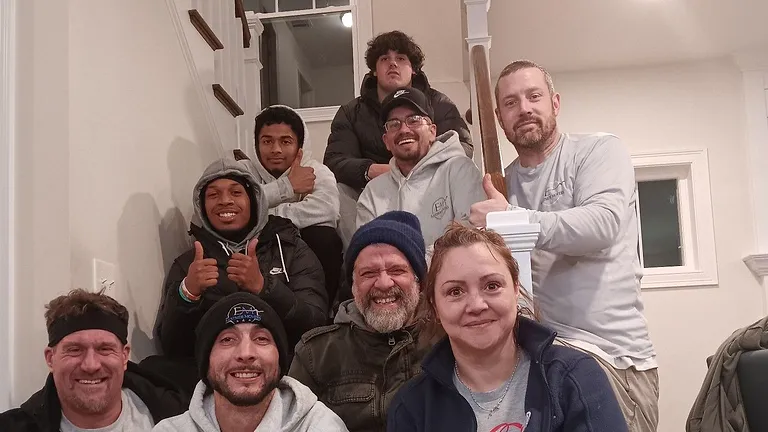
The Eastside Movers team gathered on an indoor staircase

Auto Parts Store Moving FAQs

Another question? Call (774) 421-9389.

How should we label parts when the new store uses different bin numbers?

Build a crosswalk from each old aisle and bin to the new one before packing starts. We write the new location on each container, and the old one too if you want it, and unload by the new code. Anything your parts lead has not assigned yet waits in a marked holding area.

Can our counter keep filling parts pickups while back aisles are packed?

Yes. Mark the aisle or bins the counter still needs and we pack around them, starting with the aisles farthest from the counter. Keep a clear path for staff and customers, ideally with our carts using the rear door. The counter aisle is the last one packed.

What happens to heavy rotors and drums stored above lighter stock?

They come down first and are packed in small, strong loads, a few to a carton. They ride low on the truck, away from filters and trim, and at the new store they go on the lower shelves unless your layout says otherwise. Your staff do the final shelving.

Who moves parts-bin shelving that is fixed to the stockroom wall?

Your fixture installer, after the landlord confirms it is yours to take. The installer unbolts it at the old store and anchors it at the new one. Freestanding shelving we break down, move, and stand back up to your layout.

Plan your business move

Tell us both addresses, the building rules you know about, and the dates you cannot move. We will send back a written plan and estimate.

Call (774) 421-9389

Mon–Sat 8:00 AM – 5:00 PM

Call Now call 774-421-9389