Commercial Service

Gym Equipment Moving in Boston and MetroWest

Plan the route for heavy machines before moving day, use each model's disassembly guidance, and protect the floor beneath every transfer.

(774) 421-9389
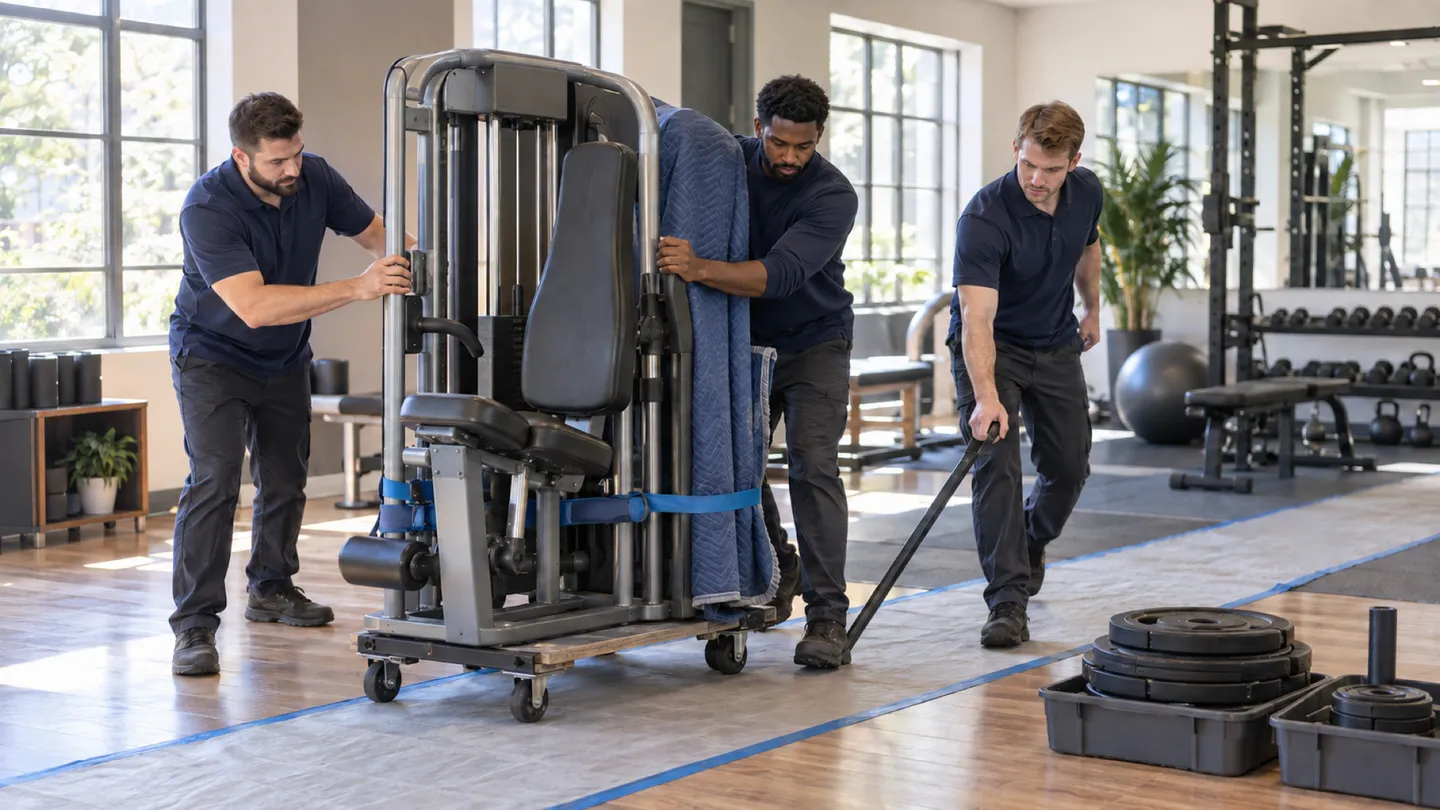
Gym Equipment moving in Boston and MetroWest: moving crew at work
  • Licensed & Insured Fully Covered
  • Owner-Operated By Tyler Trefrey
  • 10 States Northeast Served

Start your free commercial move quote

verified For estimate purposes only credit_card_off No credit card required

How We Plan Gym Equipment

Gym equipment work starts on the strength floor and in the free-weight area: the steel and iron that a moving crew can safely handle, and a clear handoff for what it cannot. We move power racks, squat stands, benches, plate-loaded machines, dumbbells, plates, bars, storage trees, spin bikes, rowers, and plyo boxes. Powered cardio, meaning treadmills, ellipticals, and stair climbers, goes to your equipment vendor or fitness service company, because those machines carry motors and electronics the manufacturer wants its technicians to handle. So does any frame too heavy to move without lifting gear.

The work runs in a set order. First, your staff strip the floor of attachments. Then we pull plates and dumbbells, box them by weight, and tag each rack and bench to its station on the new plan. Racks that bolt to the floor wait for your installer to pull the anchors. Freestanding frames come apart where the manufacturer's instructions allow, with hardware bagged per frame. At the new site, weights go in last, once every frame is standing on its station.

Who usually signs off
Gym owner, facilities manager, or equipment manager who approves the machine inventory and confirms the vendor's service plan
Timing that works
After the last session on the training floor and before the new floor is released for heavy loads, with the equipment vendor's visits on both sides; overnight or weekend work on request.

What typically moves

  • Power racks, half racks, and squat stands Broken down where the maker allows; uprights, crossmembers, and hardware tagged as one set.
  • Adjustable and flat benches Padded and tagged by station.
  • Plate-loaded machines Plates off first; frames moved whole or in the sections the maker allows.
  • Dumbbells, plates, bars, and kettlebells Boxed or crated by weight in small loads; racks and trees travel empty.
  • Spin bikes, rowers, and air bikes Unpowered pieces; seats and handlebars lowered and padded.
  • Cable-machine attachments and accessories Handles, straps, and collars bagged by the machine they belong to.

Access and scheduling

Measure each frame against doorways, corridor bends, and the elevator cab, in the size it will travel. A rack that has to come apart to clear a door needs its instructions on hand before move day. Tell us which frames are anchored, which pieces are being sold or retired, and where each piece goes on the new plan.

Iron is heavy, so ask the building about elevator weight limits and loading hours; an upper-floor club in Boston may need the freight elevator booked for a full day and a certificate of insurance on file, which we can issue. The equipment vendor usually handles the powered machines on its own day, before or after ours. At the new site, the flooring installer has to release the floor for heavy loads before any frame is set down.

Protection and handling

Weight is the whole problem. Plates and dumbbells are boxed a few at a time in strong cartons or small crates, never loose, and they ride low on the truck. Frames travel on dollies over runners or hardboard, and nothing is dragged across rubber flooring, since steel feet tear it and grit scars it.

Door frames, glass walls, and elevator cabs get pads, and loads are split so no single elevator trip goes over the posted limit. Each frame's bolts and pins go in a bag taped to that frame. At the new site, frames are stood up, squared on their stations, and checked for level before the weights come in, and pieces the maker says must be torqued or inspected after assembly are left for your vendor's check before members use them.

Who does what

Some of this job belongs to other trades. The written plan names each one.

Treadmills, ellipticals, stair climbers, and other powered machines
Your equipment vendor or fitness service company prepares, moves, installs, and tests them.
Selectorized and cable machines that need stacks or cables released
The fitness technician pulls stacks and releases cables, then retensions and checks them. Frames too heavy for hand moving go to a rigging crew.
Floor anchors and rubber flooring
Your installer pulls and sets anchors; the flooring contractor says when the floor can take the load.

Not part of our work

  • Moving powered machines or anything that needs forklifts, rigging, or lifting gear.
  • Drilling, anchoring, or certifying equipment for member use.
  • Electrical connections of any kind.

Around Boston and MetroWest

Strength floors in Boston and Cambridge are often in basements or upper floors of older buildings, where the elevator's weight limit sets how many plates ride at once. Plaza clubs along Route 9 and Route 1 and training studios in the I-495 industrial parks usually have ground-level doors and longer carries across finished floors.

The crew that shows up

Two Eastside Movers crew members outside a client's red front door

Gym Equipment FAQs

Another question? Call (774) 421-9389.

Can a treadmill go through the new gym's doorway without taking off its console?

That is a question for your equipment vendor, because treadmills are powered machines and we leave them to the vendor's technicians. They know which consoles and rails come off and how the deck travels. Send us their schedule, and we plan the racks and free weights around their visit.

Who handles the weight stack and cables on a selectorized machine?

The fitness technician. They pin or pull the stack, release the cables, and retension and test them after the machine is set. If the frame can then be moved by hand, we can carry it with its plates and pins tagged. If it still needs lifting gear, it goes with the technician's crew.

What protection should go under a heavy machine on a newly installed gym floor?

Ask the flooring installer, since the right material depends on the surface. We usually lay hardboard or runners along the route and at thresholds, where wheel pressure is highest. Nothing heavy is set down until the installer releases the floor for heavy loads.

How should we prepare freestanding racks and their loose weights for the move?

Strip them: plates, bars, collars, bands, and attachments off, and mark each rack's station on the new plan. We box the weights, take the frame apart where the maker allows, and bag its hardware. If a rack is bolted down, have your installer pull the anchors before we arrive.

Plan your business move

Tell us both addresses, the building rules you know about, and the dates you cannot move. We will send back a written plan and estimate.

Call (774) 421-9389

Mon–Sat 8:00 AM – 5:00 PM

Call Now call 774-421-9389