Commercial Service

Boston High-Rise Office Moves

A tower move depends on the freight elevator, loading slot, building paperwork, and a legal place for the truck before any desk leaves the floor.

(774) 421-9389
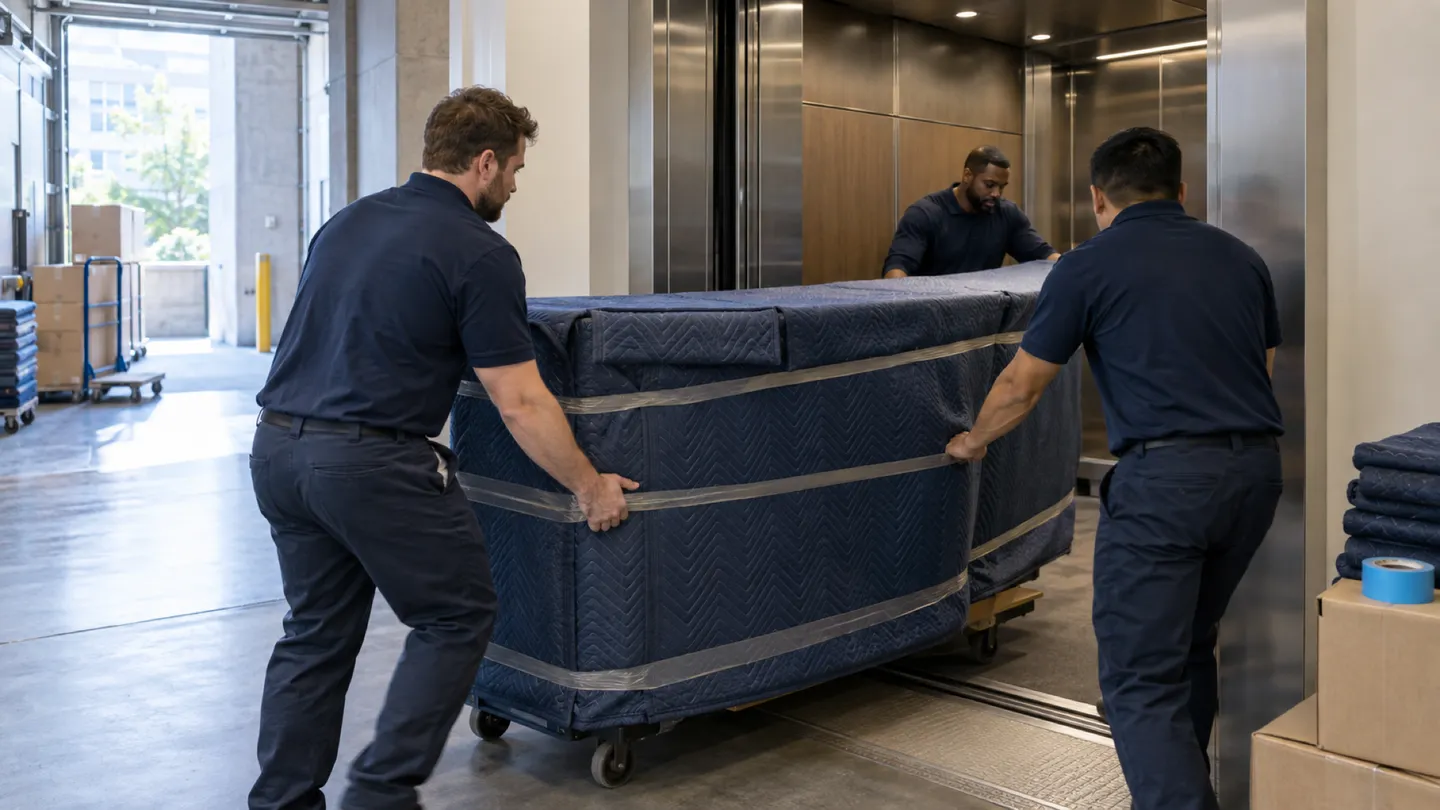
Boston High-Rise Office Moves moving in Boston and MetroWest: moving crew at work
  • Licensed & Insured Fully Covered
  • Owner-Operated By Tyler Trefrey
  • 10 States Northeast Served

Start your free commercial move quote

verified For estimate purposes only credit_card_off No credit card required

How We Plan Boston High-Rise Office Moves

In a Boston office tower, the building runs the move. Property management hands you a move packet, and it usually covers the same ground: freight elevator reservations in blocks, a dock slot, the service entrance you must use, floor and wall protection rules, a certificate of insurance naming the owner and the manager as additional insureds, and, in many buildings, a rule that moves happen after business hours or on weekends. At the other end, a different tower has its own packet, and the two rarely match.

This service starts by reading both packets. We trace the route at each tower: where the truck stands, the service door, the freight cab's size and capacity, the corridor to the suite, and where carts can stage without blocking another tenant. Then we match the loads to the elevator blocks, because in a tower the freight cab, not the truck, sets the pace. If the dock cannot take the truck, the truck needs a street-occupancy permit from the City of Boston for a curb space, and that request goes in before the building dates are final.

Who usually signs off
Facilities lead or office manager who approves the move plan and works with property management at both towers
Timing that works
The freight elevator and dock blocks each tower assigns, which in many Financial District and Back Bay buildings means evenings or weekends; we book to those blocks on request.

What typically moves

  • Reception desks and lobby seating Measured against the service door and freight cab before the date.
  • Conference tables and credenzas Bases come off where needed to fit the cab; hardware bagged with each table.
  • Workstations and task chairs Tagged by floor and room so carts go straight to their rooms.
  • File cabinets and sealed records cartons Staff seal sensitive cartons; we label by destination room.
  • Desk computers, monitors, and printers Tagged by station and hooked up where the seat map puts them.
  • Break-room tables and freestanding cabinets Fixed or plumbed items wait for the building's trades.

Access and scheduling

Send both move packets as soon as you have them. Some towers book the freight elevator and the dock together, others separately, and some need a building engineer or security officer on duty for the move. We need the cab's door size and interior height, the dock height, the cart route, staging rules, and the protection each building requires, such as hardboard on floors and pads in the cab.

Forward each building's insurance wording with the exact names it wants on the certificate, and we send certificates for their review. If the truck has to use the street, apply to the city for a street-occupancy permit well ahead, since the city posts the space before the date and a dock booking does not cover the curb. Evening and weekend blocks are what many towers allow; we plan to them on request.
Protection and handling

Tower damage happens at the same few places: the dock plate, the service-door threshold, the freight cab's walls and door edges, and the corridor corners on the way to the suite. Those get hardboard, corner guards, and cab pads before the first cart moves, laid to the building's rules.

Big pieces are measured against the cab first, and anything that will not fit standing comes apart before it reaches a shared corridor. Carts go from the cab straight to labeled rooms so the freight lobby never fills with furniture. Desk computers are plugged back in at their stations; your IT contact checks the network and phones. Anything attached to the building or wired into it waits for the building's contractor or a licensed trade.

Who does what

Some of this job belongs to other trades. The written plan names each one.

Freight elevator, dock, service entrance, and move packet
Property management sets the rules and confirms reservations; your facilities contact books them.
Curb space and street-occupancy permits
The City of Boston issues permits and posts the space.
Network, phones, and building-connected fixtures
Your IT contact handles systems; the building's contractor or licensed trades handle attached fixtures.

Not part of our work

  • Using a curb without a permit or treating a dock booking as curb access.
  • Changing a tower's freight hours or corridor rules.
  • Configuring office systems or deciding which records staff release.

Around Boston and MetroWest

Financial District towers around Post Office Square often load through narrow alleys with room for one truck. Back Bay buildings along Boylston Street and the Prudential area have their own dock systems, while street-front addresses may rely on the curb. Seaport and Fort Point towers are newer, with formal dock calendars and service corridors.

The crew that shows up

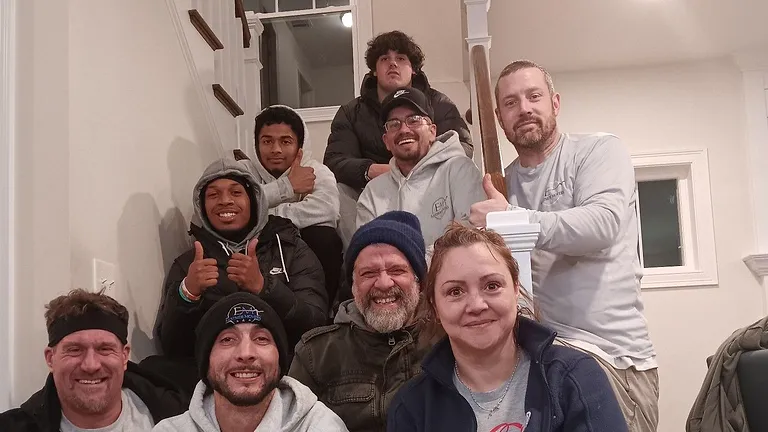
The Eastside Movers team gathered on an indoor staircase

Boston High-Rise Office Moves FAQs

Another question? Call (774) 421-9389.

Our tower sent a move packet. What should we forward before asking for a date?

The whole packet from both buildings: freight reservation rules, dock hours, insurance wording, loading diagrams, and protection requirements. Add your floor at each address and the name of the property contact who approves access. With that we can check whether the route fits the truck, the carts, and your biggest pieces.

Does a reserved freight elevator also hold a dock slot in a Boston office tower?

It depends on the building. Ask management whether the dock and freight elevator are on one calendar or two, and whether an attendant or engineer has to be present. We set the loading order around the hours when both are yours. If they do not overlap, the reservation has to change before anything is staged.

What happens if the truck needs the curb instead of the building dock?

Then it needs a street-occupancy permit from the City of Boston for that address and date, and the city posts the space ahead of time. Confirm the truck spot with the building too. Once the spot is set, we measure the cart route from it to the service entrance, including any alley turns.

Why do so many Boston towers restrict office moves to after hours?

Because the freight elevators, docks, and service corridors are shared with every tenant's daily deliveries, and moves tie them up for hours. Many buildings keep moves to evenings and weekends so daytime tenants are not disrupted. Your packet will say which hours apply, and we plan the loads to fit them.

Plan your business move

Tell us both addresses, the building rules you know about, and the dates you cannot move. We will send back a written plan and estimate.

Call (774) 421-9389

Mon–Sat 8:00 AM – 5:00 PM

Call Now call 774-421-9389