
Warehouse & Light Industrial

Records Storage Moving in Boston and MetroWest

Move archive cartons by counted shelf group, keep their sequence readable, and place movable shelving to your receiving plan.

(774) 421-9389
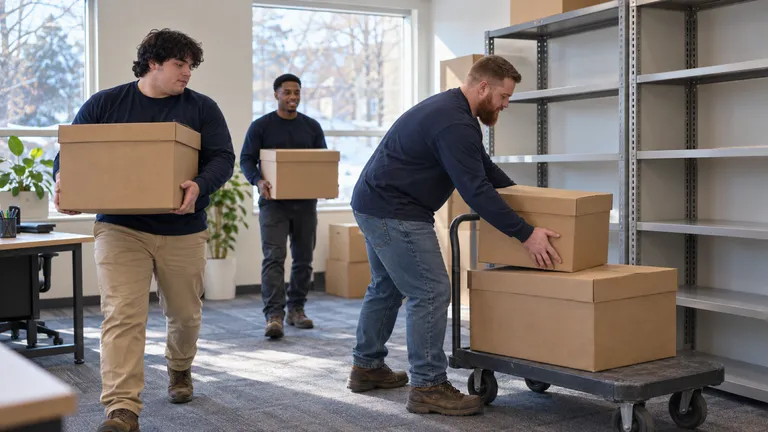
Records Storage moving in Boston and MetroWest: moving crew at work
  • Licensed & Insured Fully Covered
  • Owner-Operated By Tyler Trefrey
  • 10 States Northeast Served

Start your free records storage move quote

verified For estimate purposes only credit_card_off No credit card required

Planning a Records Storage Move

Records operations, whether a company's own archive or a records center storing boxes for clients, run on location addresses. Every carton sits at an aisle, bay, shelf, and position, and the index finds it there. A move that preserves the cartons but loses their order is a failed move, because retrievals stop working. So this is a sequencing job more than a lifting job.

Your records lead supplies the current index and the destination map. Each carton keeps its existing barcode or identifier, and a move label adds its destination bay and position without covering the original. We move one range at a time: retrievals stop for that range, it is counted and released, loaded in sequence, and shelved at the new site in the same sequence while other ranges keep working. Paper is heavy, so the receiving floor's load rating matters, especially on an upper floor of an older building. High-density mobile shelving and any shelving bolted down belong to your shelving installer.

Who usually signs off
Records operations manager or archive supervisor approving carton counts, the receiving shelf map, and access to each source range
Timing that works
Range by range, as the records lead stops retrievals from each aisle and releases it, with the receiving shelves installed and load-checked first; evening or weekend work on request.

What typically moves

  • Closed records cartons by range Original identifiers left visible; move labels add bay and position.
  • Cartons held for pending retrievals Set aside by staff until their range is released.
  • Freestanding archive shelving Moves empty, broken down, and marked to the receiving drawing.
  • Intake and indexing tables Tagged for the new work zone and placed after the staging path is clear.
  • Carton carts and rolling ladders Secured for the ride and placed where your lead wants them.
  • Indexing desks and barcode printers Computers and label printers reconnected at the same station.

Access and scheduling

Get the index count by aisle and bay, and a destination map that shows where each range will land. Where a range splits or changes, your records lead supplies a crosswalk before labeling. Ask the building engineer or landlord to confirm the new floor can take the load of full records shelving before anything is booked.

Each building sets its loading door, cart route, elevator, and hours. A records room in a Boston office building may depend on a booked freight elevator, while a records center in an I-495 flex building usually has an overhead door but little staging room beside it. Your staff decide when retrievals stop for each range, and a receiving contact checks labels as cartons arrive. We supply a certificate of insurance on request, and evening or weekend work can be planned where the buildings allow it.

Protection and handling

Order has to survive the cart and the truck. Move labels go on a readable face, cartons ride in their range groups, and each group stays together from the source shelf to the destination shelf. A carton with an unreadable label goes to one agreed exception spot for your records lead.

Cartons are lifted from the bottom, since old lids and handles give way, and weak cartons go to one side so your team can rebox them. Heavy groups never sit on damaged ones, and full cartons are stacked no higher on the truck than they can bear. Shelving moves empty, with shelves bundled by section and edges padded for doors and elevators. At the new site, the first and last cartons of each range are checked against the crosswalk before the rest are shelved.

Who does what

Some of this job belongs to other trades. The written plan names each one.

Index, counts, and destination crosswalk
Your records lead supplies them, resolves exceptions, and reconciles after delivery.
High-density mobile shelving and bolted shelving
Your shelving installer takes it down, installs it, and confirms when each bay is ready.
Records software and floor-load questions
Your IT contact runs the software; the building engineer or landlord confirms floor capacity.

Not part of our work

  • Opening cartons, changing identifiers, or deciding retention.
  • Taking down or installing mobile or bolted shelving.
  • Certifying the inventory or resolving index mismatches.

Around Boston and MetroWest

Records operations in this market range from archive rooms in Boston office buildings, where the freight elevator sets the pace, to records centers and company archives in the I-495 flex parks in Franklin, Milford, and Marlborough, and in older industrial buildings around Worcester and the Route 128 towns.

The crew that shows up

The Eastside Movers team gathered on an indoor staircase

Records Storage Moving FAQs

Another question? Call (774) 421-9389.

What should our box-count sheet show before the crew starts a records range?

Each source aisle and bay, its carton total, and the destination bay for that group, with partly filled shelves and held cartons marked. Your records lead checks it against the index. We use the totals to plan loads and leave any differences for your team.

How do we keep carton order when a source bay becomes two destination bays?

Mark the split on the crosswalk before labeling. Each carton gets a destination bay and a position within it, and keeps its original identifier. We keep the two groups apart on the carts and shelve each at its bay, checking the first and last positions as we go.

Can retrievals continue from one records range while another range is moving?

Yes. Your records lead draws a line between active and released ranges, and we work in the released ones, using a route that leaves the active aisles clear. If a carton is pulled from a range before it is released, staff update that range's count.

Can the new floor hold our records shelving?

Ask the building engineer or landlord before signing off the layout. Full records cartons are heavy, and rows of them add up, especially on an upper floor of an older building. The engineer checks the floor's rated load against your shelving plan; we plan the move once that is confirmed.

Plan your business move

Tell us both addresses, the building rules you know about, and the dates you cannot move. We will send back a written plan and estimate.

Call (774) 421-9389

Mon–Sat 8:00 AM – 5:00 PM

Call Now call 774-421-9389