Business & Professional Offices

Call Center Moving in Boston and MetroWest

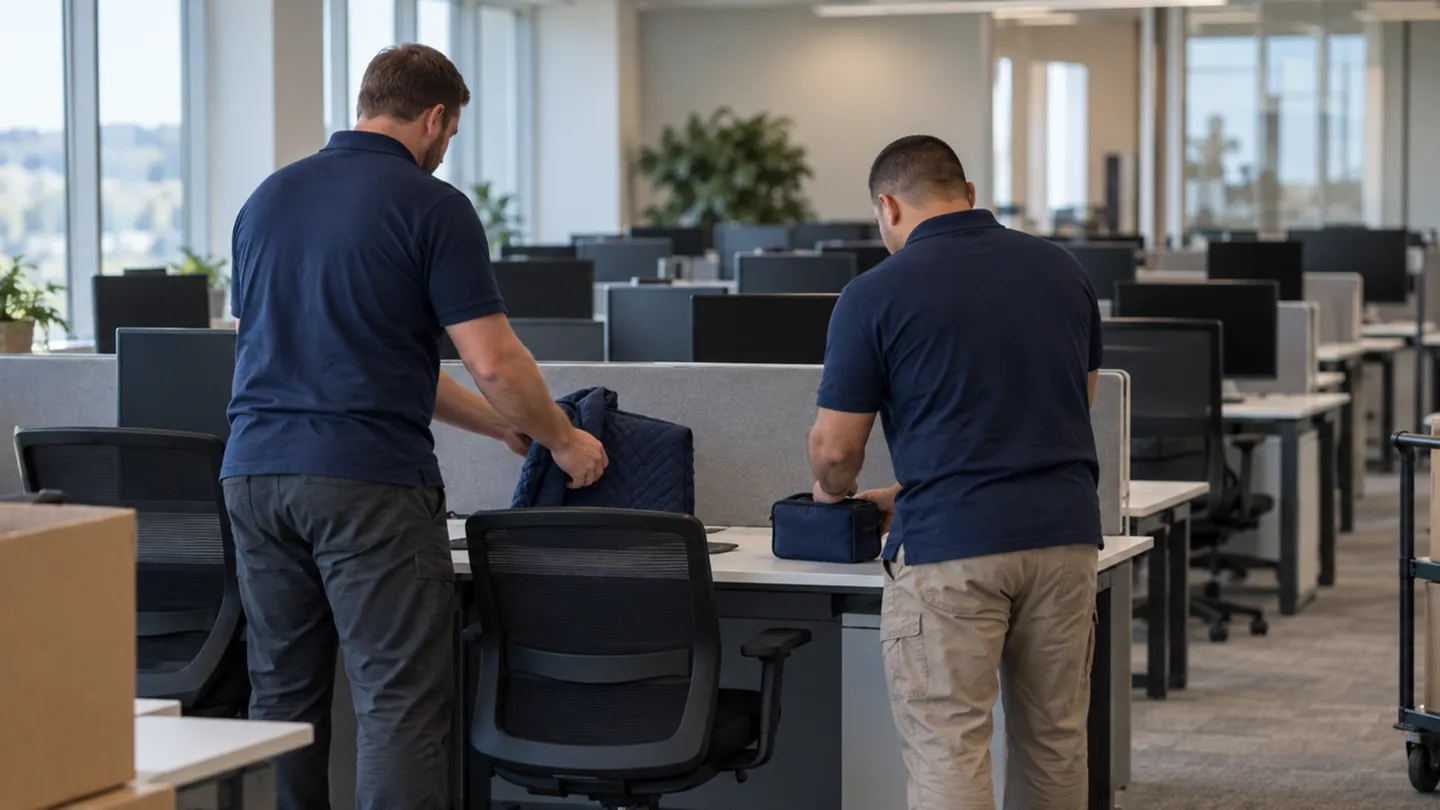
Agent rows moved as your workforce team releases them, with each seat's headset, phone, and chair tagged to its place on the new floor.

(774) 421-9389
Call Center moving in Boston and MetroWest: moving crew at work
  • Licensed & Insured Fully Covered
  • Owner-Operated By Tyler Trefrey
  • 10 States Northeast Served

Start your free call center move quote

verified For estimate purposes only credit_card_off No credit card required

Planning a Call Center Move

Phones keep ringing through a contact-center relocation, so the move has to fit around the forecast. Your workforce management team knows which hours carry the fewest calls and how many agents each queue needs, and that decides how many rows can go dark at once. Some centers move the whole floor over a weekend. Others move a pod at a time and send agents home or to the new site as their row goes.

What we bring is a seat plan the crew can follow at speed. Every seat on the new floor gets a number, the matching seat on the old floor is tagged with it, and the headset, handset, footrest, and chair from that seat travel in a bag or on a cart marked with that number. Supervisors' desks and wallboards sit where they can see their teams before the rows around them are filled. Your phone provider handles routing and extensions, and agents sit down on day one at seats that are already theirs. For the furniture itself, see our disassembly and reassembly service.

Who usually signs off
Operations director or facilities manager approving the shift release plan and receiving seat chart
Timing that works
The lowest-volume hours in your own forecast, often Friday night into the weekend on request, with the phone and routing cutover set by your provider before the Monday open.

What typically moves

  • Agent benching and pod workstations Taken apart by pod, hardware bagged under the pod number, and rebuilt to the new floor's seat drawing.
  • Headsets, amplifiers, and charging bases Each agent's set goes in its own seat-numbered bag, which matters in centers where headsets are personal issue.
  • Desk handsets and softphone screens Packed with the seat tag and set at the numbered seat for your provider to bring up.
  • Supervisor stations and team wallboards on stands Placed first, with sightlines to the rows they manage, before agent seats are filled.
  • Training room tables and spare seat kits Kept under a separate code so training equipment never ends up on the production floor.
  • Agent chairs and footrests Ergonomic chairs are often set for one person, so they ride with the seat number, not by row.

Access and scheduling

Build the date backward from your cutover. Ask the phone provider when it will move routing to the new site and how long testing takes, then agree with your workforce team how many rows can be offline at once. We schedule the teardown behind those numbers, usually Friday night into Saturday, and a longer weekend on request.

Big operations floors are often in the Quincy and Canton office parks, in Marlborough and Framingham, or in downtown Worcester, where carts cross a wide floor from a ground-level door. Where the floor is in a Boston tower, the freight elevator sets the pace, so we book it for the whole teardown and rebuild and send property management a certificate of insurance when it asks.
Protection and handling

The expensive mistakes on a contact-center move are small parts: a headset amplifier left in a drawer, a charging base in the wrong bag, a chair adjusted for someone else. Each seat's small parts are bagged before the station comes apart, and the bag stays on the seat's cart until the rebuild.

Benching and pod parts get corner guards and padded carts, and carpet along the route gets runners, because a full floor means many trips over the same path. At the new floor we check every seat against the drawing before handing it over, so your provider's technicians can test phones seat by seat. Agents notice a wobbly desk or a missing monitor arm on the first shift, so we note any short hardware as we go and tell your facilities lead before the floor is handed back.

Who does what

Some of this job belongs to other trades. The written plan names each one.

Call routing, extensions, and phone system cutover
Your phone or contact-center software provider moves routing and tests every seat before agents log in.
Seat assignments and which rows go offline
Your workforce and operations leads set them. We follow the released-row list and the seat chart they sign off.
Floor power and data cabling at each pod
Your electrician and low-voltage cabling contractor make and test those connections once the pods stand.

Not part of our work

  • Configuring the phone system, routing, or agent logins.
  • Wiring pod power or making any connection to building electrical.

Around Boston and MetroWest

Around Greater Boston, contact centers run on large open floors in the Crown Colony area of Quincy and the Canton office parks, in the Marlborough and Framingham office buildings along I-495 and the Mass Pike, and in downtown Worcester. Our Franklin base puts the crew close to the 495 sites, and Boston tower floors are planned around the building's freight schedule.

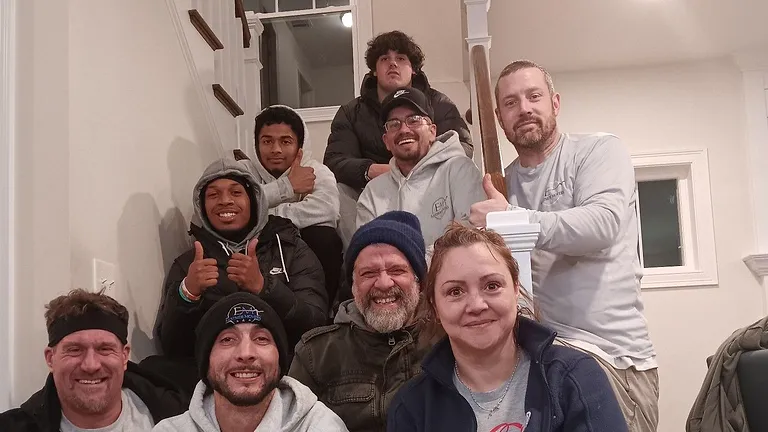
The crew that shows up

The Eastside Movers team gathered on an indoor staircase

Call Center Moving FAQs

Another question? Call (774) 421-9389.

Can agents keep taking calls in one pod while the next pod is torn down?

Yes, if the operations lead releases pods in order and the carry route stays clear of the live ones. We tape off the working pod, stage parts away from agents, and keep noise down where we can. The workforce team decides how many seats can be offline at once; we size the crew to that number.

Our agents use their own headsets. How do they stay with the right person?

The seat number is the link. Before a pod comes apart, each agent's headset, amplifier, and base go into a bag tagged with the new seat number from your chart. The bag rides with that seat's parts and is set on the rebuilt desk. If seat assignments change, send the revised chart before we tag anything.

What if the new floor has fewer seats than the old one?

Mark the seats that disappear on your chart before we start, and decide where those agents go: a different pod, a hot-desk zone, or home. Their gear gets a holding tag rather than a guessed seat. We keep holding-tag bags together and set them where your operations lead says once the chart is final.

How does the phone cutover fit with the furniture move?

Your provider sets it, and we plan around it. Most centers want seats built and checked before the provider tests routing at the new floor, so the furniture rebuild usually finishes the day before the cutover. Tell us the provider's test window and we will have the pods ready ahead of it.

Plan your business move

Tell us both addresses, the building rules you know about, and the dates you cannot move. We will send back a written plan and estimate.

Call (774) 421-9389

Mon–Sat 8:00 AM – 5:00 PM

Call Now call 774-421-9389