Property, Institutional & Government

Assisted Living Facility Moving in Boston and MetroWest

Move administration and shared spaces around resident routines; plan each room transition with the family and facility staff.

(774) 421-9389
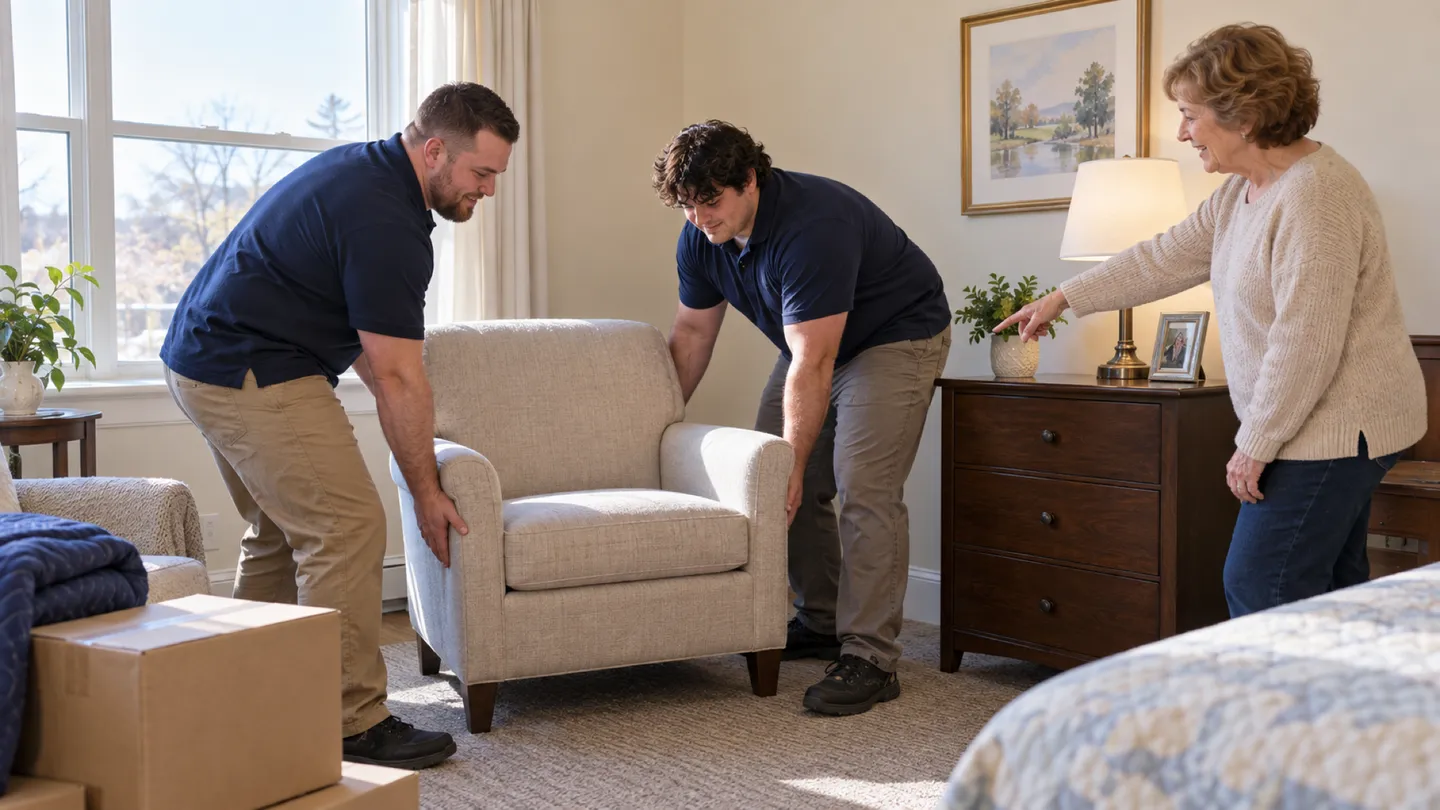
Assisted Living Facility moving in Boston and MetroWest: moving crew at work
  • Licensed & Insured Fully Covered
  • Owner-Operated By Tyler Trefrey
  • 10 States Northeast Served

Start your free assisted living facility move quote

verified For estimate purposes only credit_card_off No credit card required

Planning a Assisted Living Facility Move

An assisted living residence is a workplace and a home at once, and every move inside it has to respect both. The administrator may need the reception desk, dining room, activity room, or business office rearranged during a renovation, while residents live on every floor. A resident may also be moving from one apartment to another, or into memory care, on a date that the resident, the family, and the care team have settled together.

For shared spaces, we work from the facility's daily calendar: meals, medication rounds, activities, quiet hours, and shift changes. The crew works in the windows staff release and stops when residents need the corridor. Memory care neighborhoods usually have secured doors, so a staff member walks the crew through. For a resident's own move, the resident or family decides what comes, where each piece goes, and which keepsakes they want to carry themselves. Medications, care supplies, and resident records never pass through our hands. Our senior moving page covers moves from a family home into a residence.

Who usually signs off
Facility administrator or operations director approving the shared-space scope, with each resident or family directing personal room contents
Timing that works
Between meal service, medication rounds, and quiet hours for shared spaces; resident apartment moves on dates set with the resident and family, and postponed if the building is under an outbreak protocol.

What typically moves

  • Reception desk and lobby seating Moved outside visiting hours and set so check-in keeps working.
  • Dining tables and chairs Moved between meals, one section at a time, so the next meal has seating.
  • Activity-room cabinets, tables, and supply carts Staff choose which activities stay available during the change.
  • Business-office desks and closed file cartons Files sealed by staff; desks and cartons follow the office plan.
  • Resident armchairs, dressers, and nightstands Tagged to the spot on the family's sketch of the new apartment.
  • Photographs, artwork, and keepsakes Wrapped individually; families may prefer to carry some themselves.

Access and scheduling

Ask for the day's schedule: meal times, medication rounds, activities, quiet hours, and shift change. Shared-space work fits into the gaps, and the crew pauses whenever residents need to pass. A service entrance or staff elevator is usually the route, and a staff member should be able to open secured doors. Where the facility frees the space after dinner or on a Saturday, our crew can come then.

Resident apartment moves need their own plan. The family confirms what moves and where, and the care team confirms when the new apartment is ready and when the resident will be out of the room or settled elsewhere during the work. In flu and respiratory-virus season, a facility may limit outside visitors under an outbreak protocol, and a move may need to wait. Management often wants proof of our insurance; the certificate goes to them before the date.

Protection and handling

Corridors in assisted living are lined with handrails and residents' doors, so carts stay close to the wall opposite the rail, move slowly, and never stage in front of an apartment. Runners go down where management allows, and elevator cabs and corner turns get pads. Walkers and wheelchairs have the right of way.

In a resident's apartment, the family points out the pieces that matter most before anything is wrapped. Framed photographs and lamps are wrapped one by one, drawers stay packed so clothing arrives folded, and each piece is set where the sketch shows it, with the bed, chair, and nightstand placed first. Before we leave, the family or resident checks the arrangement and staff confirm the hallway is clear again.

Who does what

Some of this job belongs to other trades. The written plan names each one.

Medications, care supplies, and resident records
Facility staff handle them under their own procedures and move them to the new apartment.
Emergency call pendants, pull cords, and fixed room equipment
Facility maintenance or the equipment vendor removes, installs, and tests them.
Choosing belongings and approving the new room
The resident or family decides what moves and where it goes; staff confirm the room is ready.

Not part of our work

  • Handling medications or care supplies, or opening resident records.
  • Removing or reconnecting emergency call systems or fixed equipment.
  • Deciding what a resident keeps, donates, or discards.

Around Boston and MetroWest

Assisted living residences around Boston tend to be mid-rise buildings with a staff elevator, in Brookline, Newton, Needham, Wellesley, and Quincy. Farther out, in Framingham, Natick, Franklin, and the I-495 towns, many are larger single-campus buildings with long corridors and separate memory care wings.

The crew that shows up

Two Eastside Movers crew members outside a client's red front door

Assisted Living Facility Moving FAQs

Another question? Call (774) 421-9389.

Can the activity room move while residents still use the dining room?

Yes, if the route to the activity room does not cross the dining room during a meal. Staff release the activity room, we move its cabinets and carts along a hallway that avoids the dining area, and we clear the corridor before the next meal or activity.

Who tells the crew what belongs in a resident's new room?

The resident or their family. A short list of the pieces that are coming and a simple sketch of where the bed, chair, and dresser go is enough. The care team confirms the apartment is ready. Before we leave, the family checks the arrangement.

How do you keep a shared hallway usable during quiet hours?

By not working in it then. The facility gives us the quiet hours and the times carts should stop, and we move in the open windows and nowhere else, using a staging spot off the corridor. Runners and padded corners protect the route, and residents with walkers or wheelchairs go first.

Can a resident's move go ahead during a flu outbreak in the building?

That is the facility's decision. During an outbreak, many residences limit outside visitors, including movers, until the protocol is lifted. If the move date falls inside that period, we reschedule with the family and the facility once the building reopens to visitors.

Plan your business move

Tell us both addresses, the building rules you know about, and the dates you cannot move. We will send back a written plan and estimate.

Call (774) 421-9389

Mon–Sat 8:00 AM – 5:00 PM

Call Now call 774-421-9389